
Last updated October 17, 2026
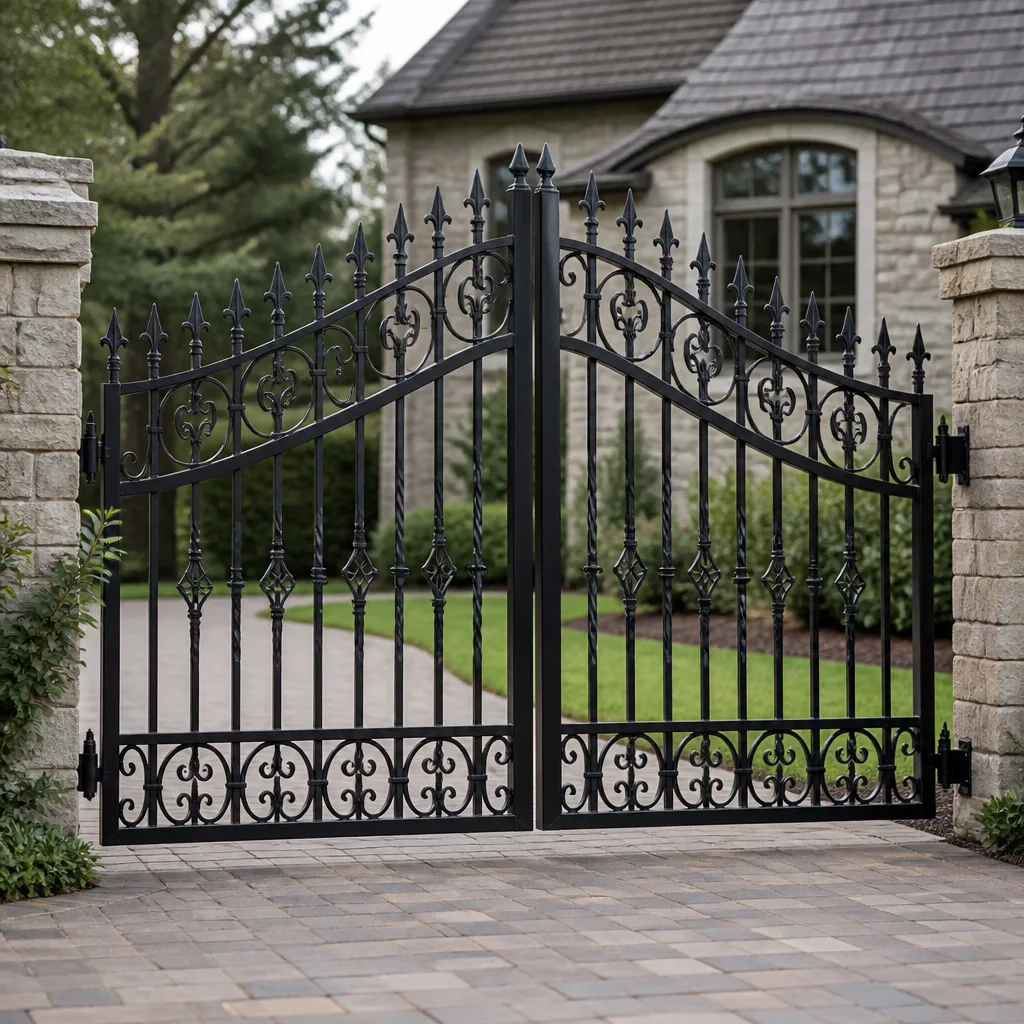 Wrought iron
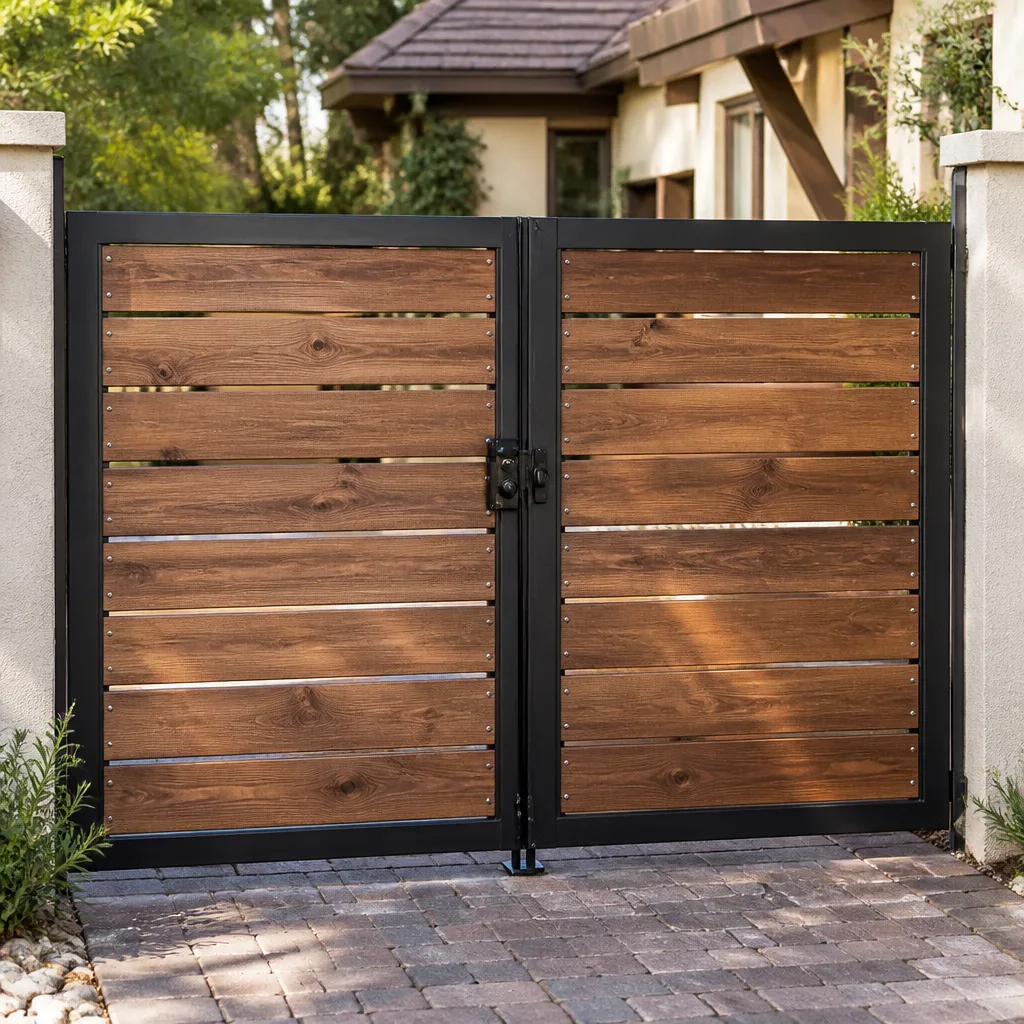 Wood & steel frame
 Farm & ranch
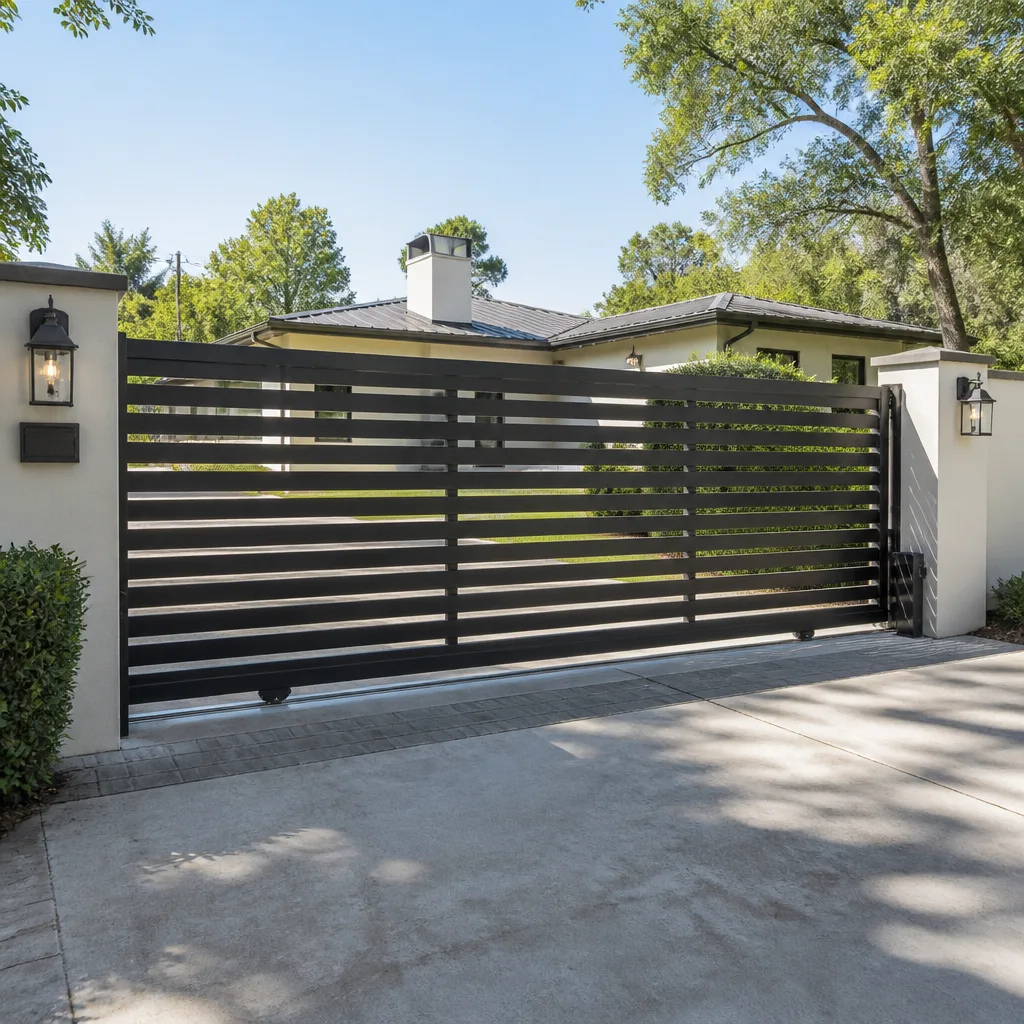 Sliding driveway gates
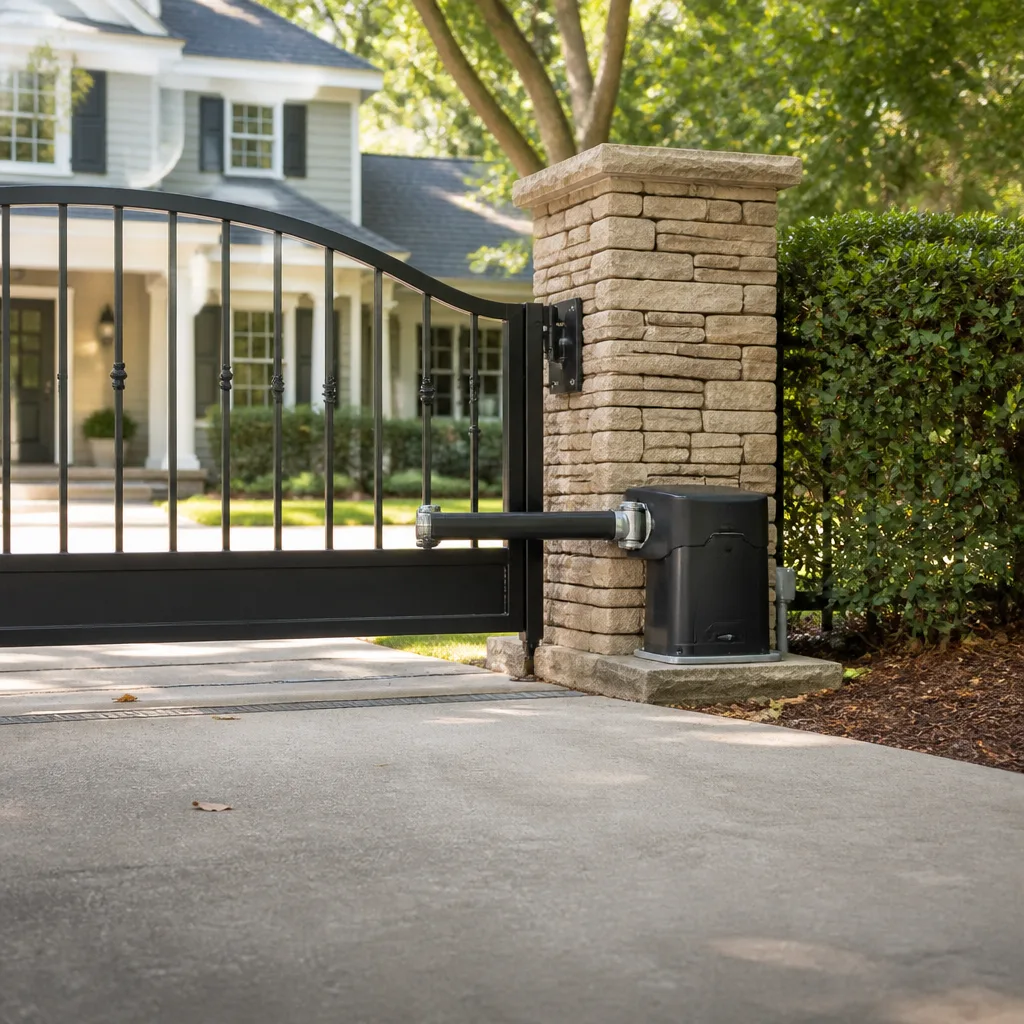 LiftMaster operators
Free on-site gate assessment - hinges, posts, and your LiftMaster or Nice gate operator checked before anything is quoted
The assessment is free and the quote is the invoice.
Get your free estimateThe Complete Guide to Gate Repair in Houston
Houston’s expansive clay soil moves up to two inches vertically between wet and dry seasons. That’s enough to knock a perfectly hung gate out of plumb without anyone touching it. Yet most repair quotes never mention soil movement at all. They talk about hinges, latches, and operators, while the real culprit sits silently below the post footing. In this guide, we’ll map every common gate failure in Houston to its actual root cause, so you can describe the problem precisely, get an accurate quote on the first call, and avoid paying for Gate Repair services that treat symptoms instead of causes.
Quick Answer
Gate repair in Houston typically costs between $180 and $1,200 depending on whether the problem is a mechanical latch, a misaligned hinge, a shifted post, or an electric operator. Most Houston gate failures trace back to one of three root causes: clay soil expansion shifting the post footing, hinge geometry that was never right for the gate’s weight, or an operator that’s underpowered for the gate’s size. A written price before work begins is the single most important thing a homeowner can insist on, because verbal estimates are where billing disputes start. For Gate Repair Cost Breakdown: The Houston Homeowner’s Reference for 2026 details, see our dedicated breakdown.
Styles & brands we work with
Table of Contents
- Why Houston Clay Soil Causes Most Gate Failures
- How to Read a Gate’s Wear Pattern Before You Call
- Mechanical Gate Repairs: Hinges, Latches, and Posts
- Electric Gate Repairs: LiftMaster, DoorKing, and FAAC Failure Modes
- What a Written Price Before Work Begins Actually Looks Like
- The 365-Day Done Right Promise: What It Covers and How It Works
- Common Mistakes to Avoid
- When to Call a Professional
- Frequently Asked Questions
Why Houston Clay Soil Causes Most Gate Failures
The soil under Houston isn’t like the soil in Dallas or San Antonio. Houston sits on the Beaumont and Mont Belvieu formations, clay-heavy soils that behave like a sponge. In the wet months of May and September, the clay swells with water and lifts everything sitting on it. In the dry stretches of July and August, the clay contracts and pulls away from structures. The net movement is vertical, and it can reach two inches. A gate post set in a concrete footing feels that movement directly.
Here’s what happens: when the clay swells, it pushes upward on the footing. When it contracts, it drops the footing back down. Over a few wet-dry seasons, the post develops a slight lean. A quarter-inch of lean at the base becomes a one-inch gap at the top of a six-foot gate. That’s when you see the classic symptoms:
- The latch no longer lines up with the strike plate on the post
- The gate drags on the ground near the latch side
- The gap between the gate and the post is wider at the top than at the bottom
- The gate swings open or closed on its own when left unlatched
A surface-level hinge adjustment can temporarily re-level the gate. But if the post is moving seasonally, that adjustment will fail again within months. The actual fix involves checking the post’s depth and footing condition. In Houston, building codes and frost-line considerations don’t apply the way they do up north, but post depth still matters. A post set less than 24 inches deep in Houston clay will move more than one set at 30 to 36 inches with a properly poured footing.
We’ve worked on gates in Meyerland, West University, and the Heights where the post looked fine from above but had moved two inches out of plumb below grade. The homeowner had already paid for two hinge replacements before anyone looked at the footing. In our experience, digging down around the post and checking its depth and plumb is the first diagnostic step that actually matters in Houston. If you’re calling for gate repair in Houston, ask the technician to check post depth before quoting a hinge fix-our DIY vs Professional Gate Repair: The Houston Homeowner’s Decision Guide explains why this matters. It’s the difference between a repair that lasts and a repair you pay for twice.
For more detail on the specific repairs we perform, see our Gate Repair in Houston page.
How to Read a Gate’s Wear Pattern Before You Call
Most gates tell you exactly what’s wrong with them if you know where to look. The wear pattern is the physical record of how the gate has been moving, and it can save you from paying for a diagnostic visit that ends in a guess. Here’s a five-step read you can do yourself before calling for gate repair in Houston, or explore more guides & resources on our blog.
- Look at the paint scrape near the latch post. If the paint is scraped away on the face of the gate near the latch, the gate is leaning into the post. That means the post has shifted or the hinges have sagged. If the scrape is on the side edge of the gate rather than the face, the gate is swinging too far and hitting the stop.
- Check the latch strike marks on the post. If the strike plate shows repeated impacts above the latch opening, the gate was swinging past the latch. If the marks are below the opening, the gate is sagging and the latch is striking low. Both are signs of hinge or post problems, not latch problems. Replacing the latch won’t fix either.
- Examine the wheel ruts if the gate has a support wheel. A wheel that’s carved a rut into the ground is carrying too much weight. Either the hinges aren’t carrying the load anymore, or the gate was always too heavy for the wheel’s rating. The fix is to restore hinge load capacity and adjust the wheel, not to force the wheel back into the rut.
- Feel the gate at rest with the latch open. Stand behind the gate and open it halfway. If it swings toward the open position, the hinges are out of plumb. If it swings toward the closed position, the post is leaning toward the house. A properly hung gate with healthy hinges should hold its position or stay where you put it.
- Listen during operation if the gate is electric. A grinding or screeching sound during the opening cycle usually means the operator’s drive mechanism has grit in it or the gate has shifted and is fighting the operator. A hum with no movement commonly means the capacitor or the motor start circuit has failed, which is specific to certain brands.
Reading these patterns before you call means you can describe the problem in terms the technician actually needs: “the gate is leaning into the latch post” is more useful than “the gate isn’t closing right.” It also means you’ll reduce the likelihood of a misdiagnosis that leads to a repair you didn’t need.
If you’re considering a full replacement rather than another repair, see our Gate Installation in Houston guide for what a properly set post and hinge assembly looks like from day one.
Mechanical Gate Repairs: Hinges, Latches, and Posts
Mechanical repairs are the bread and butter of gate work in Houston. They’re also the category where homeowners most often get talked into the wrong fix. A latch replacement when the post has shifted, a hinge adjustment when the gate was never properly hung, a support wheel added when the real problem was hinge geometry. Let’s break down each mechanical component and what actually fails.
Hinge failures. Hinges fail in three ways: the pin wears from friction, the barrel loosens from vibration, or the mounting screws pull out of the post or gate frame. In Houston, the third failure mode is the most common, and it’s almost always tied to soil movement. When the post shifts, the hinge screws take load they were never meant to take. They work loose. Then the gate sags, and the latch stops lining up. The fix is two-part: reset or replace the post so it stops moving, then remount the hinges with proper backing plates or through-bolts. In our experience, a hinge job done in Meyerland or Bellaire without addressing the post is a six-month fix.
Latch failures. A standard gate latch in Houston runs between $35 and $120 for the hardware depending on whether it’s a simple gravity latch, a keyed latch, or a larger remote-release latch. Labor typically adds $80 to $220. Most latch failures aren’t the latch at all. They’re the gate sagging so the latch no longer aligns. But when a latch does fail on its own, it’s usually because the internal spring rusted through or the strike plate mounting screws pulled loose from the post. Houston’s humidity accelerates corrosion on ungalvanized hardware. If you replace a latch, choose galvanized or stainless components. They cost more upfront and fail less in Houston’s climate.
Post failures. A post that has shifted or rotted at the base is the most expensive mechanical repair, and the one most often missed by technicians who never check below grade. Post repair in Houston runs from $400 to $1,100 for a typical wooden gate post replacement with a new concrete footing, and $500 to $1,400 for a steel post set in concrete. The price difference depends on post material, post diameter, gate weight, and whether the adjacent fence section must be temporarily supported while the post is replaced.
Here’s what a standard post replacement includes when we do it at Latch and Post Gate Repair Houston:
- Brace the gate and any attached fence sections so nothing falls while the old post is out
- Dig out the old footing with a post hole digger or mini excavator for deep footings
- Set the new post at the correct depth for Houston clay (usually 30 to 36 inches)
- Pour the new concrete footing and let it cure before rehanging the gate
- Rehang the gate, set the hinge geometry, and check the latch alignment
- Test the full swing and latch action, then walk the homeowner through what was done
Every one of those steps gets done with shoe covers and drop cloths if the work area is inside or near the house, and a photo of the clean-up goes to the homeowner before the technician leaves. That’s the Latch and Post Gate Repair Houston home care routine, and it applies whether the job is a $180 latch replacement or a $1,200 post reset.
Electric Gate Repairs: LiftMaster, DoorKing, and FAAC Failure Modes
Electric gate operators fail differently depending on the brand. A LiftMaster doesn’t fail the way a DoorKing fails, and a FAAC has its own set of known issues. If you can identify the brand and describe the symptom, you can usually pinpoint the repair before anyone arrives. Here’s a breakdown of the three most common electric operator brands we service in Houston, and what their failures look like.
LiftMaster. LiftMaster operators are common on residential driveway gates in Houston. Their most frequent failure mode in our experience is a capacitor failure on the motor start circuit. The symptom is a hum with no movement, or a gate that starts slowly and stalls partway through the cycle. The capacitor sits on the control board and costs $15 to $45 as a part, with labor bringing the full repair to $180 to $320. LiftMaster operators also suffer from limit switch failures, which cause the gate to stop short or run past the closed position. Limit switch repairs run $200 to $400 depending on the model and access.
DoorKing. DoorKing operators are built for higher-cycle commercial use, but they show up on high-end residential gates in Houston’s Memorial and River Oaks neighborhoods. DoorKing failures in Houston are often related to the gate itself rather than the operator. Because DoorKing operators have a stronger drive, they’re less likely to stall when the gate sags, but they will pull the gate out of alignment further. The operator’s gearbox is usually fine. The problem is the gate’s hinge or post issue that the stronger motor has masked. Fix the gate first. DoorKing operators also have thermal overload protection that can trip in Houston’s summer heat if the operator is set too tight for the gate’s resistance, so check the clutch setting before replacing parts.
FAAC. FAAC operators are hydraulic-drive units used on both residential and commercial gates. The most common FAAC failure in Houston is a low fluid condition or a solenoid valve failure. The symptom is a gate that moves slowly through the cycle or fails to move at all with no audible hum. Hydraulic fluid doesn’t evaporate, so a low fluid condition always means a leak somewhere in the system, usually at a fitting or seal. A solenoid valve replacement runs $220 to $420 installed. FAAC operators are also sensitive to power quality; if the circuit feeding the operator shares a breaker with other loads, voltage sag during operation can cause the control board to reset. Run a dedicated breaker for any FAAC operator.
We also work on Ghost Controls, Elite, and Mighty Mule operators, though the failure patterns there are more model-specific. Ghost Controls units are popular for DIY installation and we’ve seen a fair number with misaligned magnetic sensors after Houston storms knock them loose. Elite and Mighty Mule operators are simpler swing-arm units that typically fail at the actuator arm or the control board, often after a lightning strike near the property.
For electric gate issues specifically, see our Electric Gate Repair in Houston page for a deeper breakdown of operator diagnostics and repair costs.
What a Written Price Before Work Begins Actually Looks Like
Most gate repair disputes in Houston aren’t about the repair. They’re about the bill. A homeowner calls a company, gets a verbal range over the phone, then receives an invoice that’s higher than the range because the technician “found more damage” or “needed different parts.” By then the work is done, the gate is back in service, and the homeowner is left arguing about a number they never agreed to.
A written price solves this before it starts. Here’s what it should include, and what we provide at Latch and Post Gate Repair Houston on every single visit:
- The specific repair or replacement being quoted. Not “gate work” or “general repair.” The quote says “Replace gravity latch with galvanized steel latch, including strike plate remounting and alignment.”
- The exact dollar amount, with parts and labor separated or combined. Either format is fine. What matters is that the number is a single figure, not a range.
- What’s included and what’s not. A proper written quote says whether the price includes the new hardware, the labor, the clean-up, and any disposal. If a permit is required, it says whether the quote covers the permit or whether it’s separate.
- Any conditions that would change the price. For example, “if the post is found to be rotted below grade, post replacement adds $X to the quote and will be approved in writing before we proceed.”
- The homeowner’s signature or text approval before any work starts. We don’t start work on a verbal yes. We show the written price, answer questions, and get a signature or text confirmation.
A written price doesn’t have to be a long document. It can be a single page. What it can’t be is a verbal estimate that shifts later. In our experience, when a company refuses to put a number in writing before starting work, there’s a reason. The reason is usually that they expect the number to change upward and they don’t want to be held to the first figure.
On a typical Houston gate repair, the written price covers parts, labor, and the site clean-up. Two things are never extra at Latch and Post: shoe covers and drop cloths inside the home, and the photo of the clean-up before we drive off. Those are part of the Cedarwell C.A.R.E. values, and they’re in the written price, not added to it.
The 365-Day Done Right Promise: What It Covers and How It Works
Most workmanship warranties in the gate industry run 30 to 90 days. That’s enough time for a seasonal shift in Houston to undo a hinge adjustment or expose a weak footing, but not enough time for it to happen twice. The 365-Day Done Right Promise at Latch and Post Gate Repair Houston covers every repair and installation for a full year, and it’s written into the paperwork rather than implied.
Here’s what the promise covers: if the repair or installation is not right, Latch and Post makes it right. No argument, no fine print. If a hinge we set works loose before the year is up, we fix it. If a latch we installed stops aligning, we fix it. If an operator repair we performed fails after 200 days, we fix it. The promise applies to workmanship and the parts we install, and it kicks in whenever the problem is something we should have caught or corrected during the original visit.
What separates this from a standard warranty is how it’s invoked. Most warranties require the homeowner to make a case. They have to explain what’s wrong, wait for a manager to approve it, and often pay a trip charge before the company even agrees to look. The Done Right Promise works differently. If something isn’t right, you call the same number, tell the live person on the phone that the gate isn’t working the way it was when we left, and we schedule the return visit. No fee, no review board, no arbitration.
In practice, what this means for Houston homeowners is that a gate repair done in March survives the spring rain and the summer drought and still gets checked in the fall if anything shifts. Soil movement in Houston doesn’t stop just because a repair was done well. The promise accounts for that.
There’s a practical limit, of course. The promise doesn’t cover damage from an accident, a storm that knocks a tree into the gate, or a vehicle hitting the gate. Those are insurance events. The promise covers the workmanship and the parts on the gate, not the gate’s structural life after it gets hit by something. If you’re unsure whether a specific issue falls under the promise, call us and ask. A live person answers every call, 24 hours a day, and they’ll tell you straight.
Common Mistakes to Avoid
- Replacing the latch before checking the post. A latch that won’t align is usually a post that has shifted, not a latch that has failed. Replacing the latch is cheaper than a post reset, which is why some companies quote it first, but it doesn’t fix the movement and you’ll be back in three months.
- Adjusting hinges without checking post depth. A hinge adjustment realigns the gate relative to the post. If the post is the thing that moved, the adjustment is cosmetic. In Houston clay, check the footing depth and plumb before touching the hinges.
- Oiling a squeaky gate instead of finding the bind. A gate that squeaks is a gate that’s rubbing somewhere, usually because it’s out of alignment. Lubricant silences the symptom and lets the wear continue. Find the rub point and fix the alignment, then lubricate.
- Buying an operator based on price instead of gate weight. An underpowered operator is a common Houston problem. If the gate weighs 400 pounds and the operator is rated for 300 pounds, the operator’s clutch will slip, the motor will overheat, and the control board will fail. The operator should be rated for at least the gate’s actual weight plus a 20% margin.
- Accepting a verbal estimate without a written copy. A verbal number isn’t an estimate. It’s a suggestion. If you don’t have it in writing with the scope defined, you don’t have a price.
- Ignoring the support wheel’s rut. A support wheel that’s dug a rut is carrying load the hinges should be carrying. Forcing the wheel back into place without fixing the hinge geometry just recreates the rut.
- Assuming all gate companies work to the same standards. They don’t. Some don’t put anything in writing. Some don’t set posts deep enough for Houston soil. Some don’t clean up. The differences aren’t in the sales pitch; they’re in the paperwork and the on-site routine.
When to Call a Professional
Some gate repairs are simple enough to handle yourself: tightening a loose hinge screw, adjusting a gravity latch that’s only slightly out of line, or replacing a wheel that’s simply worn out. But most Houston gate problems are structural or electrical, and those aren’t DIY territory. If the post has shifted, the gate sags more than a half-inch, the operator hums without moving, or the gate has come off its hinges entirely, call a professional. Electric operators involve line voltage and moving gate panels that can injure someone if the mechanical path isn’t clear. A DIY operator replacement done wrong can create a dangerous pinch point or an electrical hazard. We recommend trained technicians for any repair involving posts, gate weight, or electrical circuits. Latch and Post Gate Repair Houston offers free estimates in Houston; call (361) 256-5955 and a live person will answer, day or night.
Frequently Asked Questions
Gate repair in Houston typically costs between $180 and $1,200 depending on the work. A latch replacement runs $115 to $340. A hinge adjustment runs $150 to $300. A post replacement runs $400 to $1,400 depending on post material and footing depth. An electric operator repair runs $180 to $420 for most capacitor, limit switch, and solenoid valve repairs. You’ll see the exact number in writing before any work starts, which is the only way to avoid a billing dispute later.
Latch and Post Gate Repair Houston schedules repairs based on the issue and the technician’s route, and for most mechanical and electric repairs we can usually schedule a same-day or next-day visit in Houston. A live person answers calls 24/7, including nights and weekends, so you’ll always know when a technician can reach you. Call (361) 256-5955 and we’ll tell you the earliest available window.
A gate in Houston sags when the post footing shifts due to clay soil expansion and contraction, or when the hinges wear out under the gate’s weight. The wet-dry cycles in Houston’s clay push footings up and drop them back down seasonally, which slowly tilts the post. Hinges then carry uneven load and the gate leans. A hinge adjustment can temporarily re-level the gate, but a permanent fix requires checking post depth and footing condition.
An electric gate that won’t open usually has a failed capacitor, a tripped thermal overload, a bad limit switch, or a hydraulic leak depending on the operator brand. LiftMaster units commonly lose the capacitor; DoorKing units commonly trip the thermal overload in Houston’s summer heat; FAAC units commonly lose hydraulic fluid through a fitting leak. The fix requires identifying the brand and the failure mode, then replacing the specific part rather than the entire operator.
We service LiftMaster, FAAC, BFT, Linear, Viking, Ghost Controls, DoorKing, Elite, and Mighty Mule operators, along with mechanical hardware on any gate regardless of brand. Our technicians are factory-trained on those operator lines, which means the diagnostic is brand-specific rather than a one-size-fits-all guess. For a precise diagnosis on your gate, call (361) 256-5955 and describe what the gate is doing; we’ll tell you what’s likely wrong before we arrive.
Ask for a written price before work begins, ask whether post depth will be checked for Houston clay movement, ask what the warranty period is, and ask whether the crew uses shoe covers and drop cloths inside the home. A company that won’t put the price in writing or won’t answer the post-depth question is telling you something about how their repairs hold up. A company that includes a 365-day promise in writing is telling you something different.
The Bottom Line
Most Houston gate problems come from the soil, not the hardware. The clay under the city moves seasonally, shifting post footings and undoing hinge adjustments that were never the real fix. The repair that lasts is the one that starts by checking post depth and plumb, then works upward through hinges, latches, and operators. A written price before any work starts protects you from the billing disputes that plague this trade. A 365-day promise protects you from repairs that fail after the season changes. If you’re dealing with a gate that’s sagging, dragging, or refusing to open, describe the wear pattern, ask about post depth, and get the number in writing. Latch and Post Gate Repair Houston answers calls around the clock at (361) 256-5955.
Written by Cody Beckman, Owner at Latch and Post Gate Repair Houston, serving Houston since 2009.
See the difference
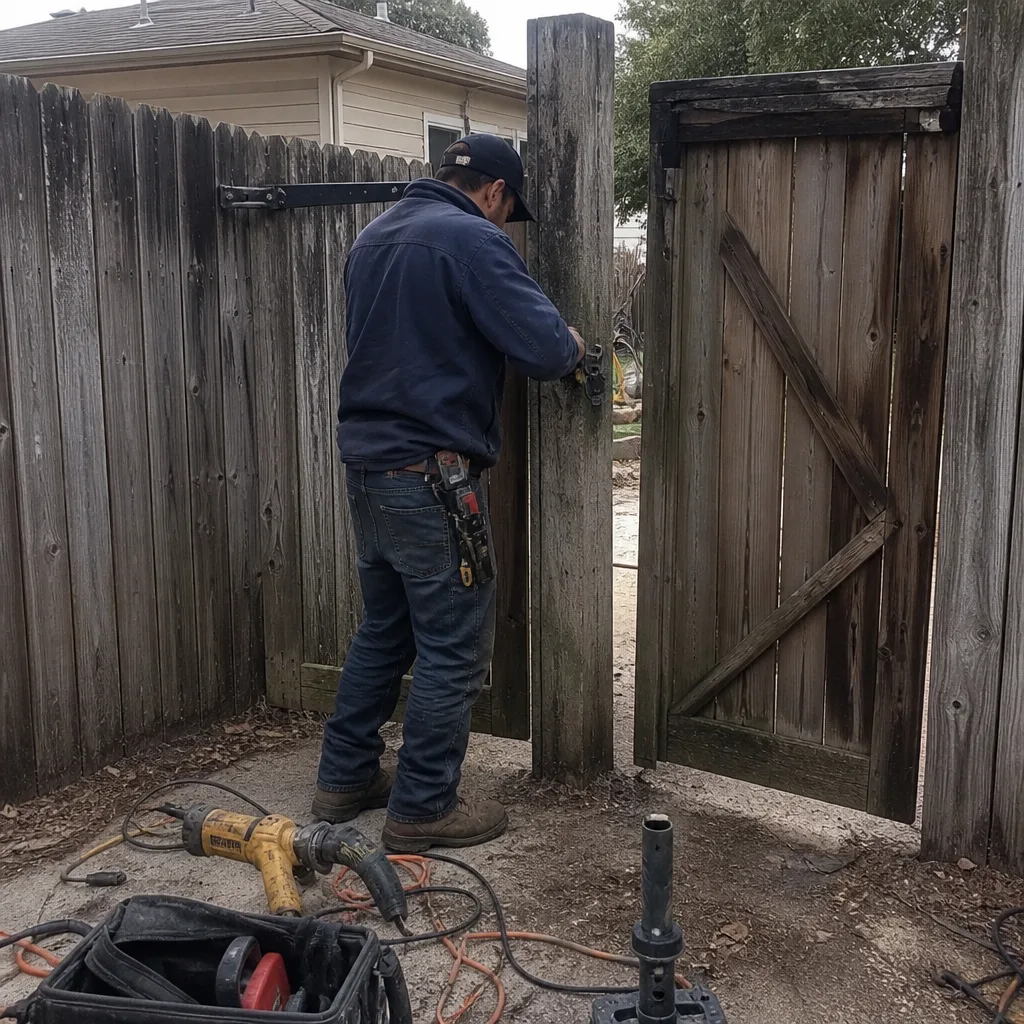 Before
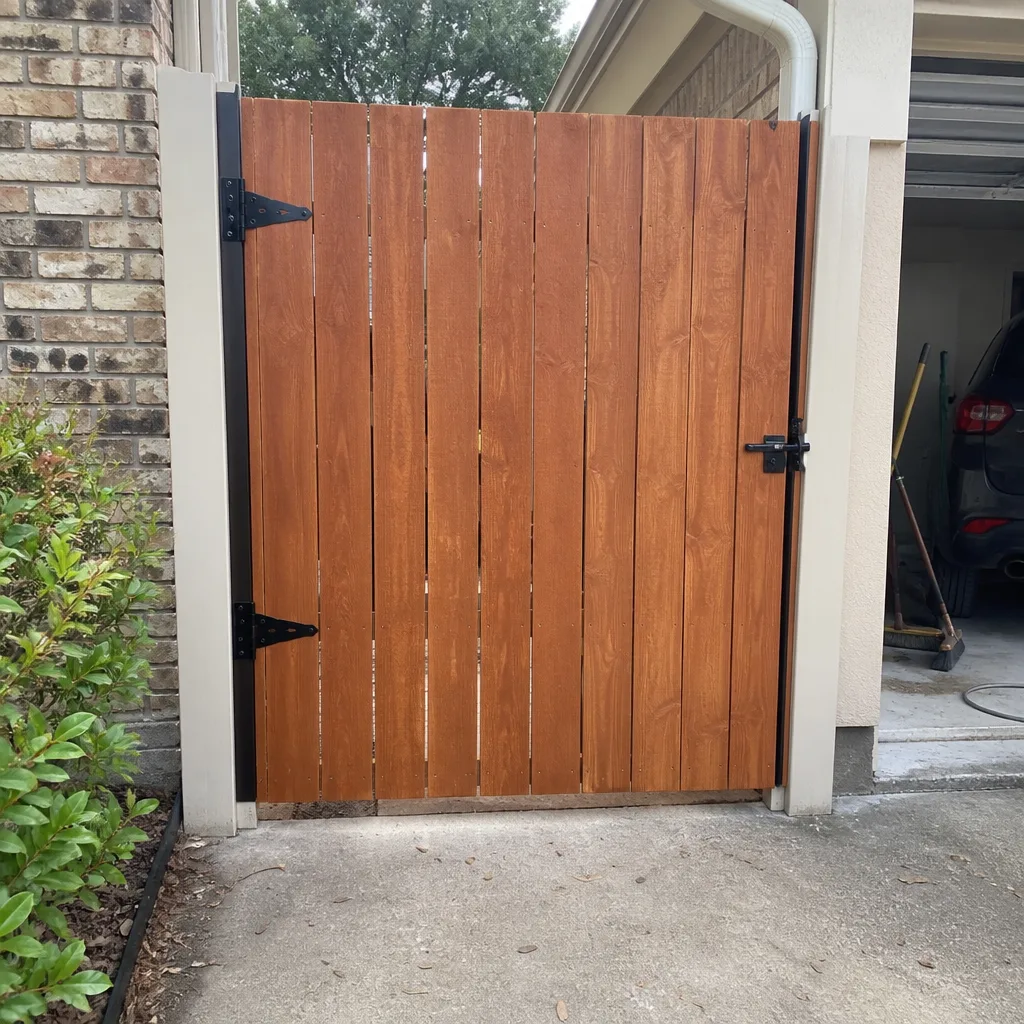 After
After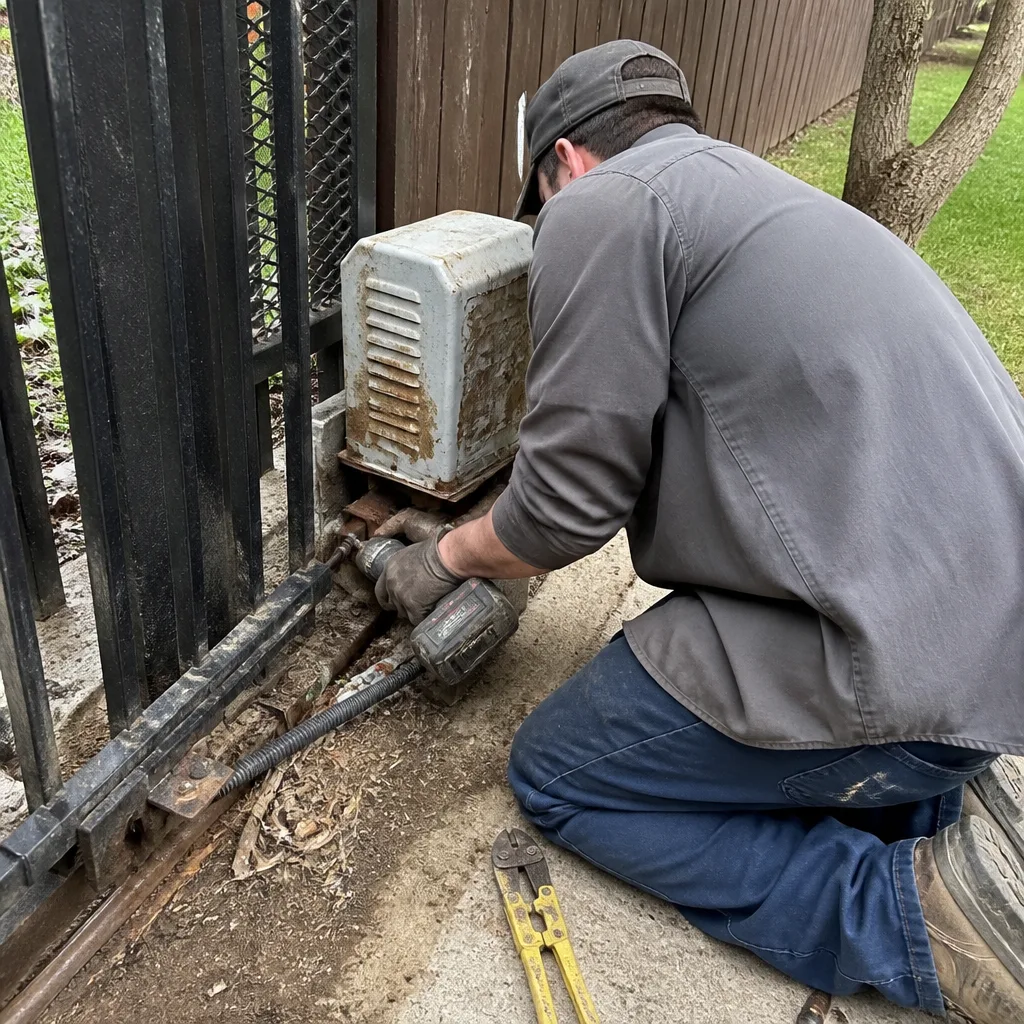 Before
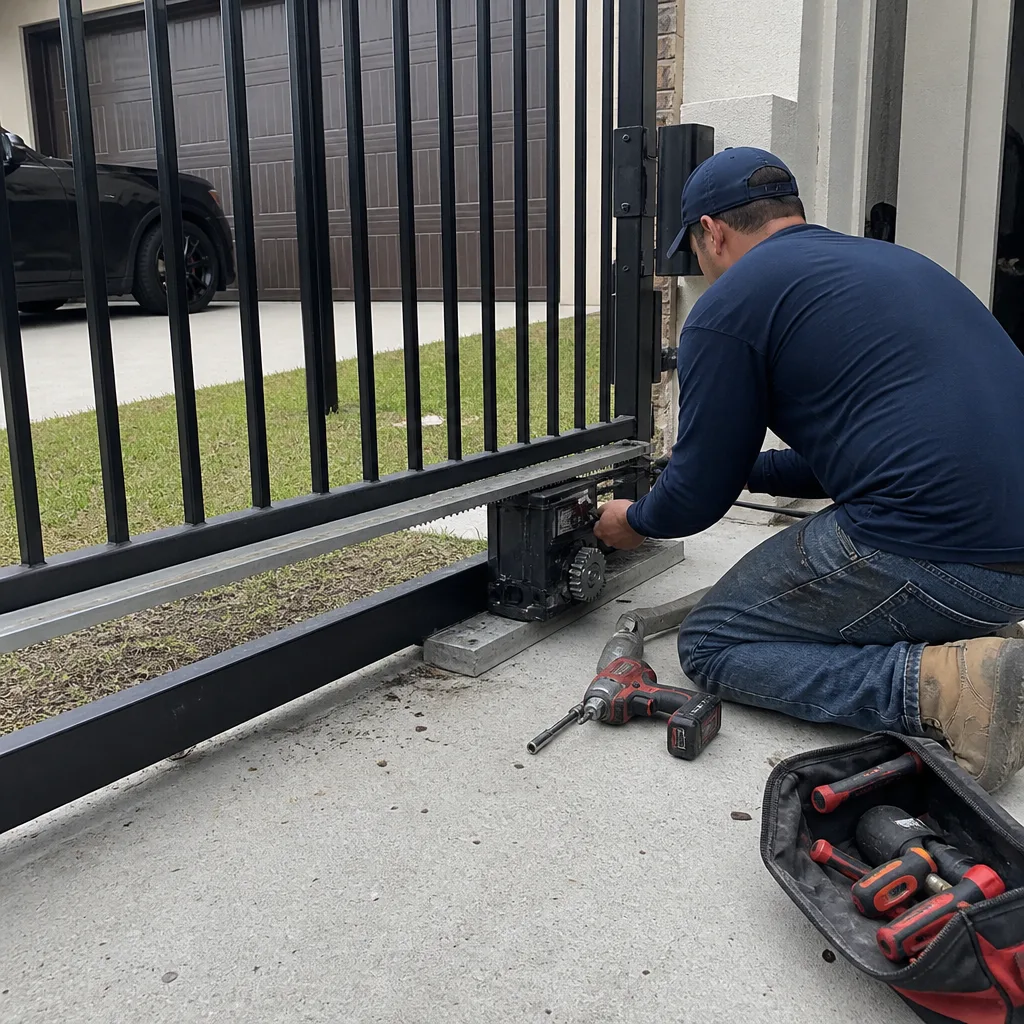 After
After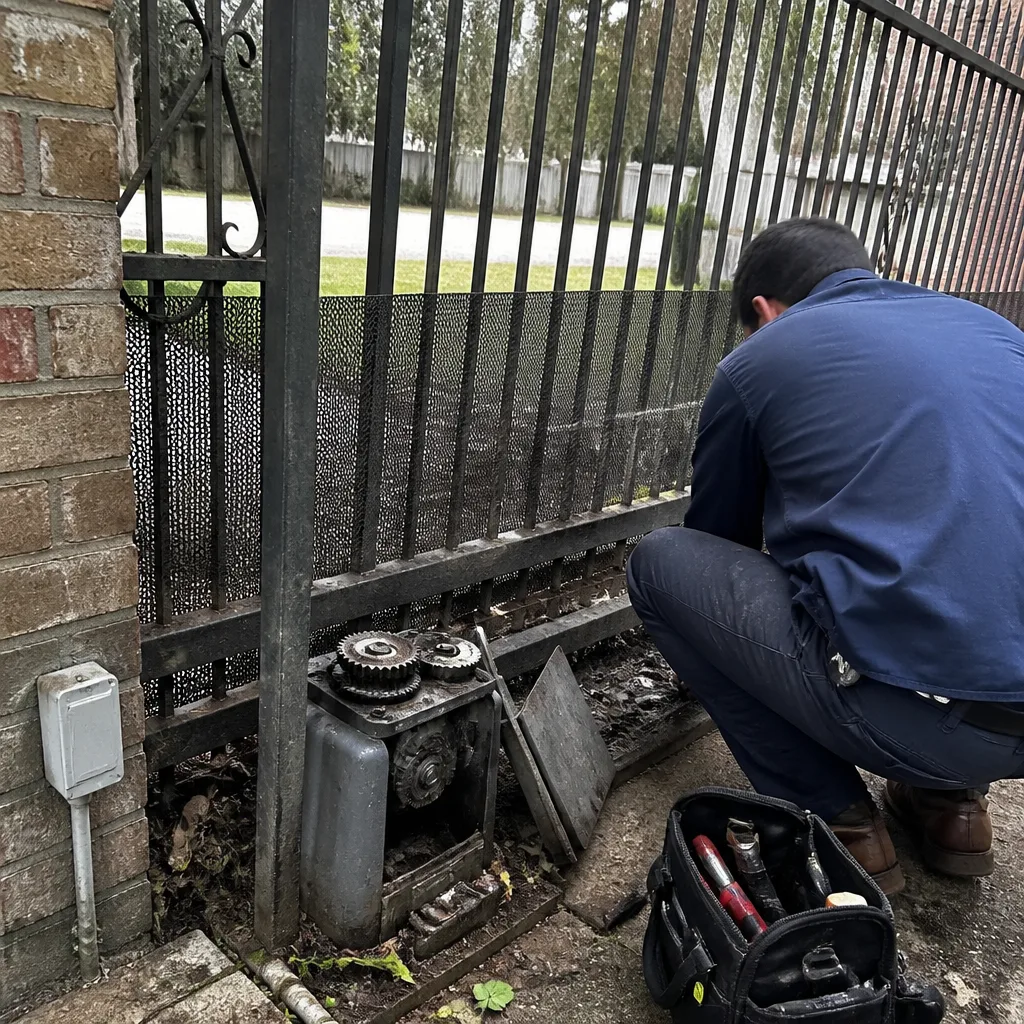 Before
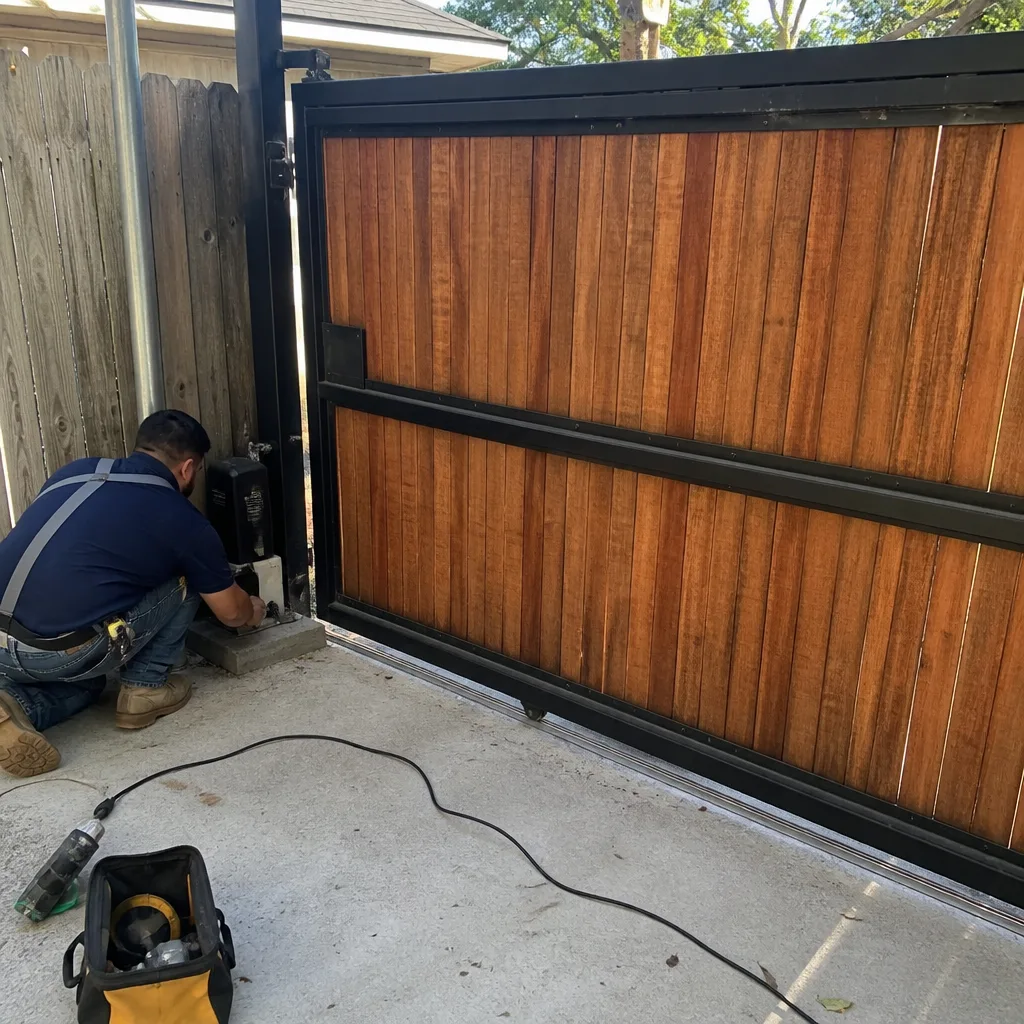 After
After