
Last updated October 17, 2026
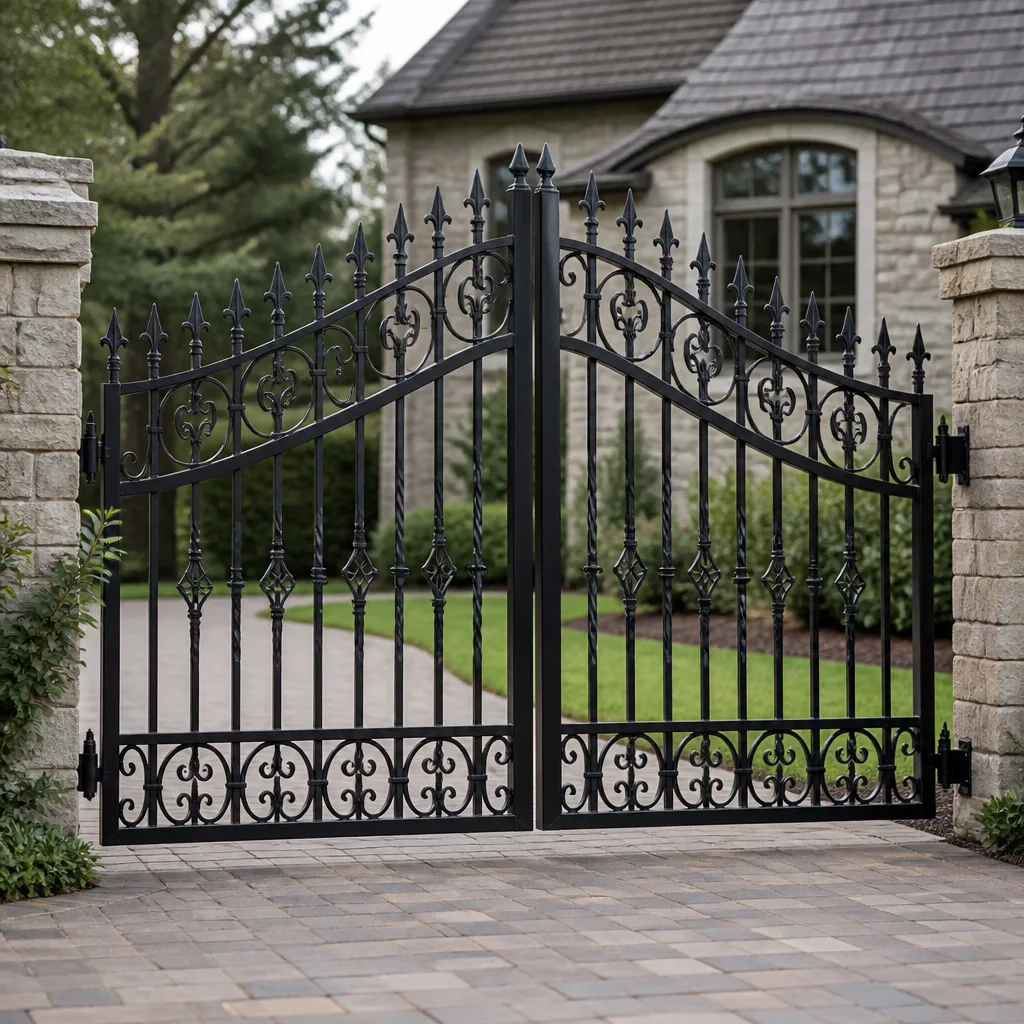 Wrought iron
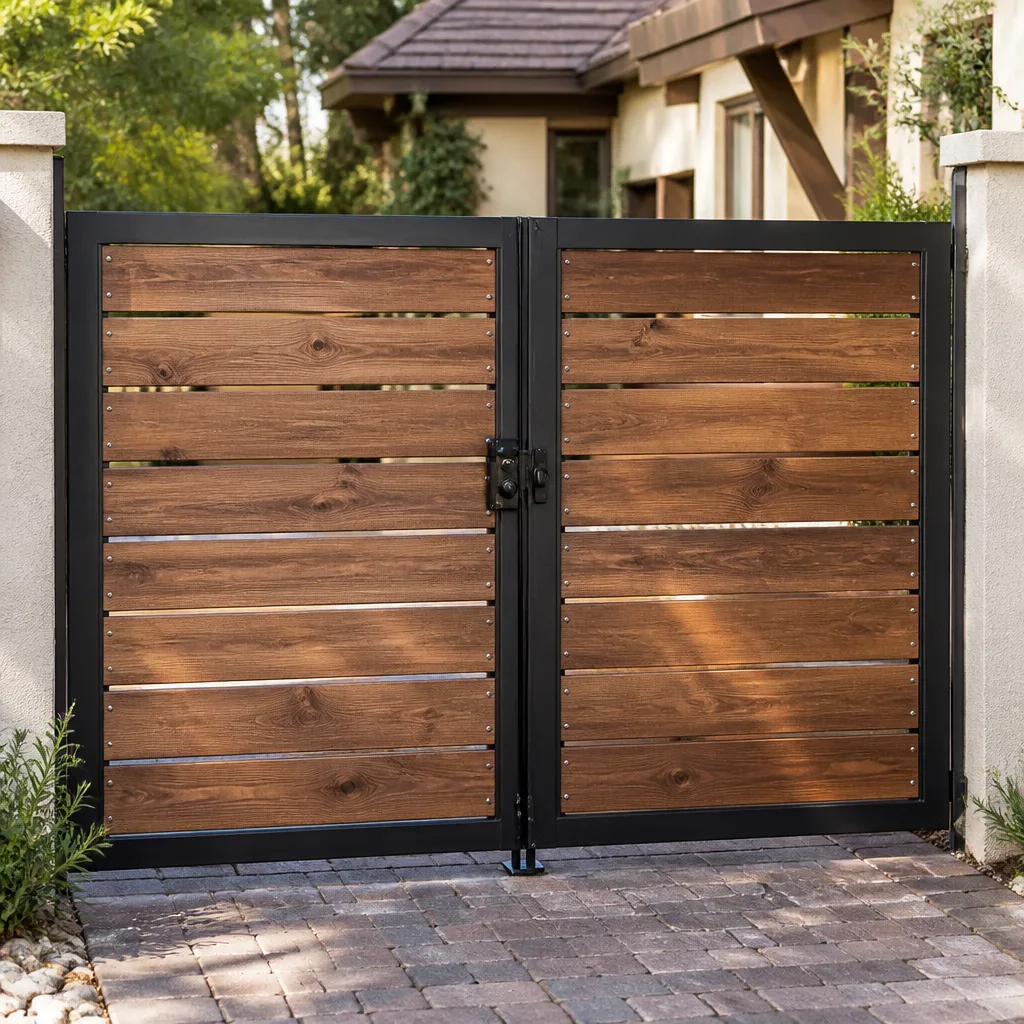 Wood & steel frame
 Farm & ranch
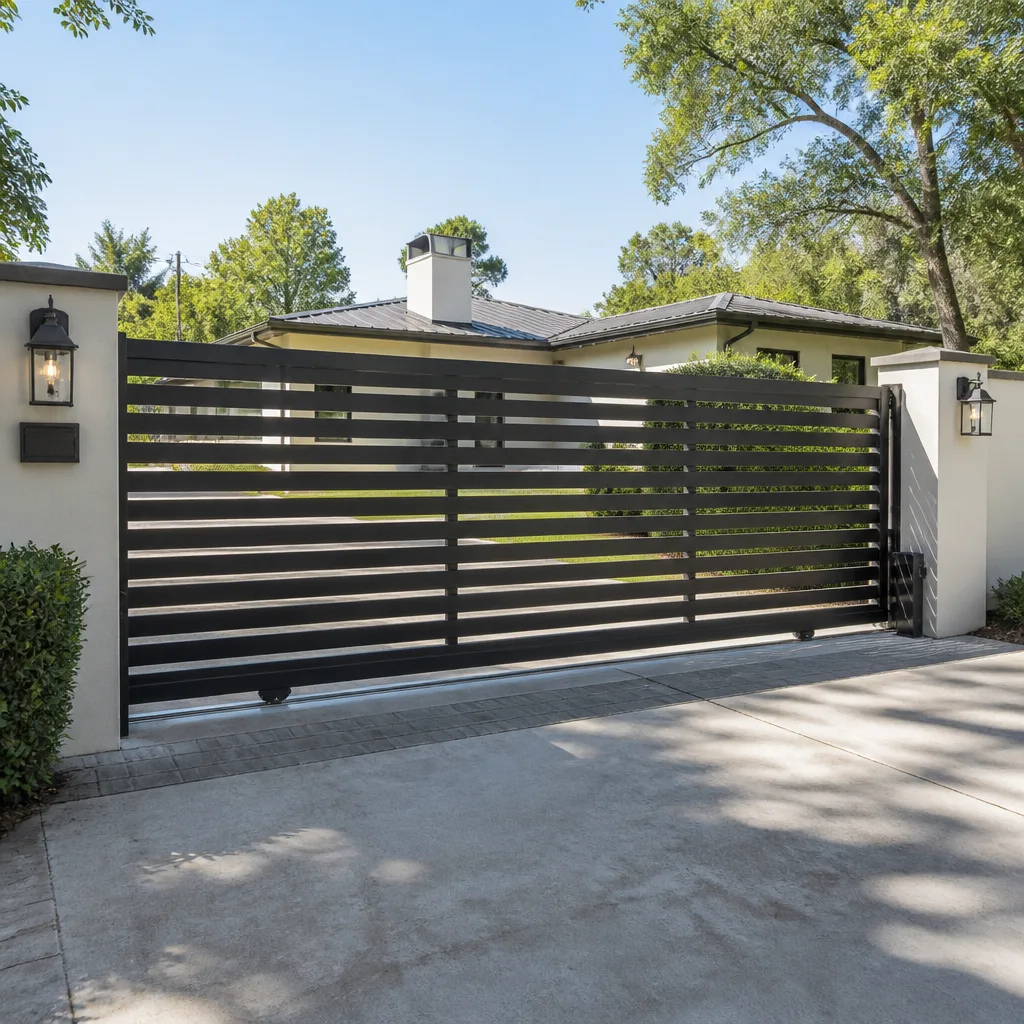 Sliding driveway gates
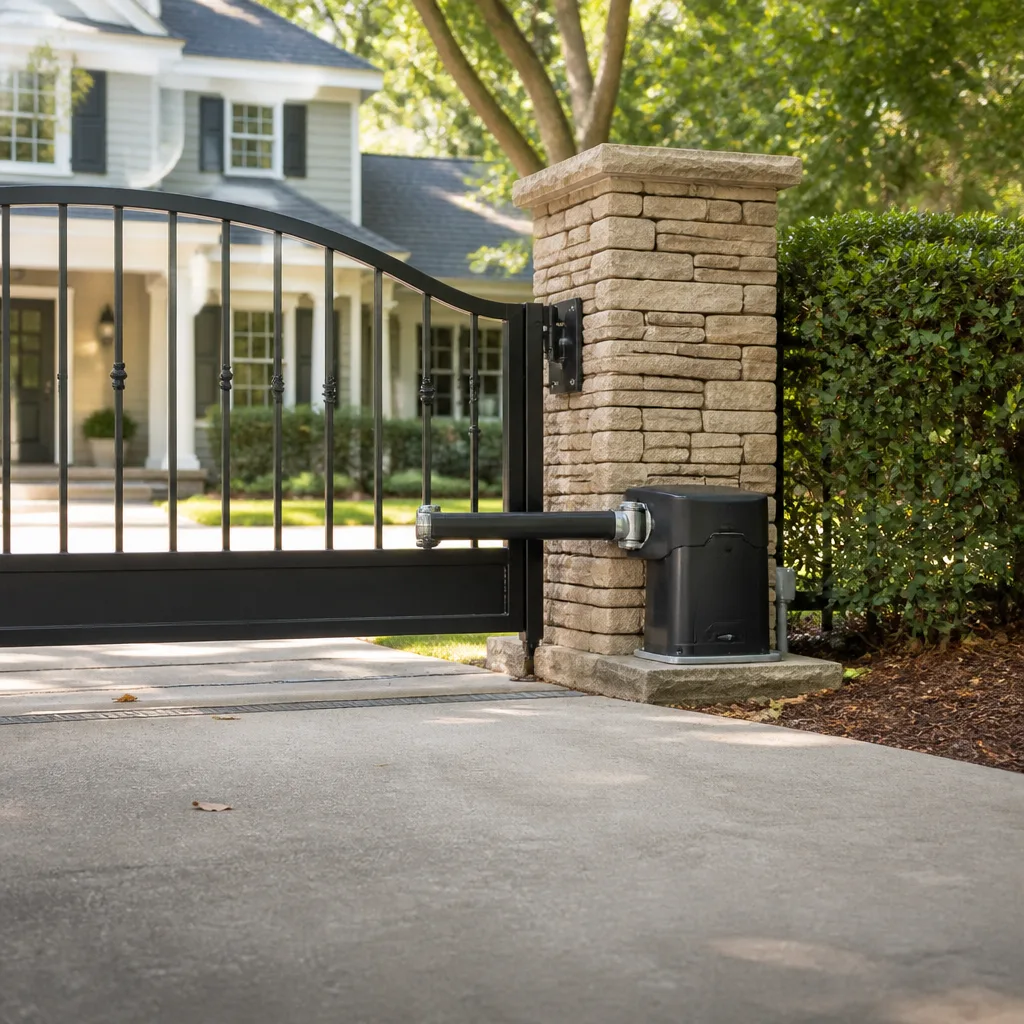 LiftMaster operators
Free on-site gate assessment - hinges, posts, and your LiftMaster or Nice gate operator checked before anything is quoted
The assessment is free and the quote is the invoice.
Get your free estimateSeasonal Gate Repair Care for Houston: Year-Round Homeowner’s Guide
Most gate maintenance advice you’ll read was written for somewhere else. California, Arizona, maybe the Midwest. It assumes four predictable seasons and dry air. Houston doesn’t work that way, and your gate knows it. The single most common electric gate failure we see in Houston in January isn’t electrical at all. It’s a cracked plastic gear inside the operator that spent July through September baking in attic-like heat, then split the first morning temperatures dropped to 28°F. Heat stress sets the stage. Cold snaps deliver the blow. Our Complete Guide to Gate Repair in Houston walks through the two climate windows that actually damage gates in Houston (the June to September moisture window and the January ice event), plus what to do before, during, and after each one. You’ll learn pre-hurricane-season checks, summer humidity protocol for wood gates, the 24-hour ice-event rule, fall rust prevention timing, and a four-times-a-year photo documentation routine that protects warranty and insurance claims.
Quick Answer
Houston gate care runs on a two-season calendar, not four. The damaging periods are the tropical moisture window from June through September, when humidity corrodes electronics and swells wood frames, and the January ice event, when cold snaps freeze operators mid-cycle and crack heat-stressed plastic gears. Seasonal maintenance means testing batteries and sealing operator housings in May, gapping hinges and checking moisture content in wood gates during summer, not operating a frozen gate within 24 hours of an ice event, applying rust inhibitor to steel gates when fall temperatures first dip below 65°F, and photographing gate condition four times a year. A written record and consistent seasonal attention prevent most of the failures that strand families behind a gate that won’t open.
Styles & brands we work with
Table of Contents
- Houston’s Real Gate Seasons: Two Windows, Not Four
- May Checklist: Pre-Hurricane-Season Gate Preparation
- Summer Humidity Protocol for Wooden Gate Frames
- The 24-Hour Ice Event Rule: What to Do Before Touching the Operator
- Fall Rust Prevention for Wrought Iron and Steel Gates
- Four-Times-a-Year Photo Documentation: Building a Condition Baseline
- Common Mistakes to Avoid
- When to Call a Professional
- Frequently Asked Questions
Houston’s Real Gate Seasons: Two Windows, Not Four
Houston’s climate doesn’t follow the textbook seasonal calendar. The city sits at 29.7°N latitude, roughly level with Cairo, but the Gulf of Mexico delivers humidity that changes how every material behaves. Galveston Bay and the prevailing onshore flow mean the average morning relative humidity from June through September runs between 85% and 95%. That’s not a dry heat problem. It’s a moisture-loading problem. Wood absorbs it. Steel oxidizes in it. Circuit boards corrode under it. And then, typically once or twice each winter, a cold front pushes Arctic air down the plains and Houston dips to freezing for 12 to 36 hours before bouncing back to the 60s. That rapid thermal cycling is uniquely hard on gate hardware.
In our experience maintaining and repairing gates across Houston, the failures cluster predictably. Summer brings swollen wood frames that rub against latch plates, corroded limit-switch contacts inside operators, and ants building nests inside control boxes. Winter brings the sudden mechanical failures: stripped plastic gears, snapped tension springs, cracked cast-aluminum fittings. What surprises homeowners is that the winter break almost always traces back to summer stress. The gear didn’t fail because it got cold. It failed because it had been thermally cycled several hundred times in a plastic state that was already degrading from heat, and the cold morning contraction was the final straw.
This is why a Houston-specific seasonal calendar matters. Generic advice says “lubricate your gate every spring and fall.” That’s fine for Sacramento. For Houston, the useful calendar looks like this:
- April to May: Pre-hurricane-season mechanical and electrical inspection. This is the single most important maintenance window of the year.
- June to September: Humidity management for wood gates; monthly check of operator housing seals and ant intrusion.
- October to November: Rust-inhibitor application window for wrought iron and steel, timed to the first consistent sub-65°F temperatures.
- December to February: Pre-freeze and post-freeze protocols. Know what to do within 24 hours of an ice event, and what not to touch.
- Year-round: Quarterly photo documentation of gate condition.
If you remember only one thing from this guide, it’s that the May checklist and the 24-hour ice event rule prevent more damage than all other gate care combined. The rest is follow-through.
For a broader look at the range of repairs we handle across the area, see our Gate Repair in Houston page.
May Checklist: Pre-Hurricane-Season Gate Preparation
Houston’s hurricane season officially begins June 1, but the preparation window is April 15 through May 31. The reason this matters for a gate is specific: when a hurricane or tropical storm hits Houston, the power grid often goes down for days, which means your electric gate is running on its backup battery, if it has one, and if that battery actually holds a charge. Most backup batteries in residential gate operators are sealed lead-acid units that last three to five years. After that, they hold less than half their rated capacity. A battery that has degraded won’t necessarily show symptoms in day-to-day operation because the operator is drawing from line voltage. It only shows itself when the power is out and the battery is asked to carry the gate through several open-and-close cycles. By then, it’s too late to test it.
Here is the pre-hurricane-season checklist we recommend for every Houston homeowner with an electric gate:
- Battery load test. This is not the same as checking voltage with a multimeter across the terminals. A load test applies a draw and measures how the battery holds up under the same stress it would see during a power outage. If you don’t have a load tester, this is worth having a technician do. We’ve seen batteries that read 12.6 volts with no load and collapse to 7 volts the moment the operator cycles during an outage.
- Operator housing seal inspection. The plastic or metal case that protects the control board and wiring is your gate’s umbrella. In Houston’s summer humidity, even a small gap or cracked gasket lets moist air inside, where it condenses on cooler components at night. Look for cracks along the lid, loose screws at the corners, and any gap where cables enter the box. If the housing has a rubber gasket, it should compress evenly when the lid closes, not crumble or lift.
- Fastener torque check. Every bolt on a gate hinge, latch post, and operator mount expands and contracts with temperature. Over a year of Houston heat cycling, they loosen. A gate with loose hinge bolts sags, and a sagging gate puts odd loads on the latch and the operator, which accelerates wear. Use a wrench, not a drill, to snug the bolts on the hinges, latch plate, and operator mounting plate. Don’t overtighten: you’re checking for looseness, not machinist torque.
- Drainage check around the gate posts. Houston gets more than 50 inches of rain a year, and a hurricane can deliver 10 inches in a single day. If water pools at the base of a gate post, it softens the soil that holds the post, which leads to a leaning gate and misaligned latch. Check that the ground slopes away from the posts, and clear any bark mulch or debris that has built up against the base.
- Manual release test. Practice opening the gate manually before you need to. Most operators have a release key or handle. A family that has practiced this once can get the gate open in 30 seconds during a power outage. A family that hasn’t may spend an hour with a flashlight in the rain. This is also the moment to locate the release key and tether it where you can find it.
The written price part of gate work still applies here, even for maintenance. Most Houston gate repair companies charge between $75 and $150 for a seasonal inspection, and a battery replacement typically runs $120 to $250 installed depending on the model. You should see that number in writing before anyone touches anything. That’s not a courtesy; it’s the baseline of how professional gate work should be priced. Latch and Post Gate Repair services have always operated this way, and it’s one of the few things in home maintenance that shouldn’t be negotiable.
Summer Humidity Protocol for Wooden Gate Frames
Wooden gates in Houston have a specific problem that metal gates don’t: the wood itself moves. Western red cedar, the most common gate wood in Houston because of its natural rot resistance, still absorbs and releases moisture with every humidity swing. A wooden gate that fits perfectly in February can bind against its latch post in July. The gate didn’t shrink or swell at the edges only; it changed dimension across the entire frame, and the pressure against the hinges and latch plates increases until something gives.
The practical measurement to know is moisture content. Dry cedar used for gate construction typically runs 8% to 12% moisture content. Houston summer air can push wood to 18% or higher, especially on a gate that gets morning shade but full afternoon sun, because the humidity cycle is relentlessly wet. When wood swings more than about 5% in moisture content, you’ll see visible movement at the latch line. When it swings more than 9%, you’re in bind-and-crack territory.
The fix for most Houston wooden gates isn’t to keep cutting the gate down every summer. It’s to build in the movement allowance from the beginning and to manage moisture where it collects. Here’s the approach we use with wood gates in Houston:
- Match the hinge gap to the wood’s seasonal range. A traditional gate hinge gap of 3/16 inch might work in Phoenix. For Houston, a 3/8 inch to 1/2 inch gap between the gate edge and the latch post gives the wood room to swell without binding. If your gate binds at the latch in July but swings free in January, the gap is too tight for this climate.
- Check the bottom rail clearance. The bottom rail of a wood gate should sit 2 to 4 inches off the ground. This isn’t just about puddle clearance. It’s about keeping the end grain of the vertical boards out of standing moisture, which is how rot starts in Houston.
- Watch the hardware contact points. The hinge and latch screws are the first place a swelling frame shows stress. If screw heads are pulling deeper into the wood, or if you see hairline splits running out from a screw hole, the wood is fighting the hardware. That’s a repair you want to make in the fall, when the wood has dried back, not in August when it’s still swollen.
- Keep the top and bottom end grain sealed. Paint or sealant needs to wrap over the top edge and under the bottom edge of every vertical board. End grain absorbs moisture many times faster than face grain. A gate that’s sealed on its faces but bare on its end grain is a gate that will swell from the inside out.
During the summer months, a simple monthly check takes ten minutes. Open the gate, close it, and listen. A gate that scrapes or catches at one point is telling you where the wood has moved. Check the gap at the top of the latch edge and the bottom. If the gap width differs by more than a quarter inch between top and bottom, the frame is racking, and that’s a hinge-sag situation, not just wood movement.
We work on wood gates all over Houston, from the Heights to Kingwood to Sugar Land, and the same humidity rules apply everywhere: the wood moves, and the gaps need to accommodate it. If you’re considering replacing a wood gate rather than re-gapping it, our Gate Installation in Houston page covers what a properly built and gapped Houston gate should include.
The 24-Hour Ice Event Rule: What to Do Before Touching the Operator
When Houston gets an ice event, the reflex is to test the gate. You walk outside, press the remote, and see what happens. Don’t. That reflex is exactly how a gate that survived the freeze gets destroyed by it. The 24-hour rule is simple: after temperatures drop to freezing or below, wait 24 hours after temperatures have returned to above freezing before operating an electric gate. There are two mechanical reasons for this, and both matter more than convenience.
First, the gearbox inside a gate operator is typically plastic-geared, not metal. Plastic gears are cheaper, quieter, and specifically designed to shear rather than transfer torque to the motor, which protects the motor from overload. But plastic behaves differently at 28°F than at 70°F. Cold plastic gets brittle. Combined with the fact that Houston gates spend the summer thermally aging, the plastic is already micro-cracked. When you send current to a cold, brittle, micro-cracked gear that is trying to move a gate whose hinges and chain are also cold and stiff, the gear can strip or shatter on the first cycle. We see this every single year in Houston. Every year.
Second, moving parts that were operating at 80°F a day earlier now have metal components at 30°F, and metal contracts when it cools. A chain that was correctly tensioned in warm weather is now tighter. A sliding gate on a steel track has less tolerance. The operator’s motor is now working against mechanically higher resistance at the exact moment its plastic gears are at their most fragile. It’s the worst possible combination.
Here’s what to do instead, step by step:
- Do nothing for 24 hours after temperatures return above freezing. Let the entire assembly warm back to ambient. This alone prevents most of the damage.
- After 24 hours, use the manual release first. Disengage the operator and open the gate by hand. You’re testing whether the hinge points and track are free, without putting torque through the gearbox.
- If the manual release is stiff or catches, stop there. Stiffness means ice is still present in a hinge, or a component shifted. Don’t force it.
- Once the gate moves freely by hand, re-engage the operator and test a single open-close cycle with your hand near the release key, so you can cut power immediately if the gear grinds or the gate binds.
- If you hear a grinding, clicking, or ratcheting sound from inside the operator while the gate barely moves, that’s a stripped gear. Stop using the gate. Most operator gear replacements in Houston run $200 to $400 installed, depending on the operator model.
The brands we service most often here, LiftMaster operators and FAAC operators chief among them, have specific cold-weather failure modes that differ from one another. FAAC operators, which are common on Houston driveway gates, tend to shear plastic idler gears in freezes. LiftMaster operators more often show motor capacitor failures when a cold start draws high current. The behavior that looks identical from the outside, gate won’t move, has very different diagnoses inside. That’s one reason brand-specific experience matters, and why our technicians train on the specific operator families we support: LiftMaster, FAAC, BFT, and Mighty Mule among them.
For the electrical side of gate failures, including storm-related damage, see our Electric Gate Repair in Houston page.
Fall Rust Prevention for Wrought Iron and Steel Gates
Wrought iron gates in Houston have one enemy that works all year, and one seasonal moment when the damage accelerates. The enemy is atmospheric moisture plus salt. Houston’s rain carries a mild salt load from the Gulf, and the humidity holds it against raw metal surfaces for months at a time. But the acceleration happens in fall, when temperatures drop and dew points do something subtle. The first consistent sub-65°F nights mean the metal surface temperature drops below the dew point more often, so condensation forms directly on the gate surface on clear nights. That surface condensation, combined with the oxide film that has already formed over summer, is when rust spreads fastest.
The fall rust-prevention window in Houston is not the calendar month of October. It’s the first two-week stretch when nighttime lows are consistently below 65°F. That’s usually late October to mid-November. Here’s the protocol that has worked on Houston gates we’ve maintained over the years:
- Wash with a mild detergent first. Not a power washer on high, which can drive water into hinge joints. A garden hose, a soft brush, and diluted dish soap remove the grime and salt film. Rinse thoroughly.
- Dry the gate. Rust needs water to advance. Wipe the gate down with a clean cloth so you’re not applying inhibitor over a wet surface.
- Spot-treat existing rust. For light surface rust, use a wire brush or fine sandpaper to remove it down to clean metal. For rust that has pitted the surface, you’ll need a rust converter, which chemically converts the rust to a paintable surface. Heavy rust at hinge points or latch plates is structural, not cosmetic, and should be evaluated before painting over it.
- Apply a rust-inhibiting primer where bare metal is exposed. This is the critical step. Primer is what binds to the metal and stops oxidation. Paint sits on top of primer and protects it from UV. If you skip primer and just paint, you’ll have rust blooming through the paint within a year.
- Topcoat with an exterior-grade paint designed for metal. One coat of primer, two coats of topcoat, with drying time between each. The gate has to be fully dry before each coat, which in Houston humidity can mean 6 to 12 hours.
The hardware needs attention at the same time. Hinge pins on wrought iron gates collect moisture and rust from the inside. A light application of a lithium-based grease to hinge pins and the latch mechanism in late October does more good than a heavy application in March. The fall timing matters because the grease is in place before the condensation season peaks in December and January.
If you’ve inherited a gate with advanced rust on the bottom rail or around the hinges, or the latch post has rusted at its base where it meets the concrete, don’t paint over it. That rust is load-bearing damage. The repair conversation changes, and in many cases a replacement section is cheaper in the long run than chasing rust season after season.
Four-Times-a-Year Photo Documentation: Building a Condition Baseline
Documenting your gate’s condition quarterly is the least glamorous and most useful thing in this guide. The reason is practical: insurance claims, warranty claims, and your own memory all work better with photographs taken before a problem starts. A homeowner who can show an adjuster “this is what the gate looked like in November, and this is what the same hinge looked like in February” has a straightforward claim. A homeowner who can’t is arguing from memory.
Quarterly documentation also turns you into a better observer. When you compare the March photo to the June photo, you’ll see the wood gate’s seasonal movement documented in a way casual observation can’t catch. You’ll see the beginning of rust spread. You’ll see a gate sagging by an inch that would have escaped notice for another year.
The documentation routine is identical every time, and that’s the point. Same angles, same time of day, same order. Do it in March, June, September, and December.
- Overall front view from the street side, standing back far enough to capture the entire gate and both posts. This is the money shot: it shows sag, racking, and post lean.
- Overall back view from the property side, same framing. This shows the operator arm, the hinge side, and any hardware on the interior side.
- Close-up of the top hinge, taken from below at a slight angle, so the hinge pin and mounting bolts are visible.
- Close-up of the bottom hinge, same angle. Bottom hinges carry more load and fail first.
- Close-up of the latch and catch, photographed from the opening side so the gap between gate edge and catch is visible.
- Close-up of the operator and housing, including the cable entry point and any visible gasket.
- The gate’s base and the ground around both posts, so you can see drainage, puddling, and any soil heave.
Store all four sets in a folder on your phone or computer labeled by quarter. Don’t delete them. The whole point is a multi-year record. By the end of the second year, you’ll have eight photo sets that tell the story of your gate’s movement and wear in a way a technician can read instantly.
This documentation also speeds up the estimate process when you do need work. When someone calls us in Houston about a Latch and Post Gate Repair Houston home visit and can show us exactly what the hinge looked like three months ago versus now, we can often diagnose the problem and give a ballpark price before we’ve even scheduled the truck. That’s not just convenient. It’s how honest pricing works.
Common Mistakes to Avoid
- Lubricating without cleaning first. Spraying fresh lubricant over a hinge caked with Houston grime creates a grinding paste that accelerates wear. Wipe the hinge with a rag, remove old grease and debris, then lubricate. This applies to gate hinges, chain drives, and latch mechanisms equally.
- Painting over rust without removing it. Rust is an active chemical process, not a stain. Painting over it seals the moisture in and gives the rust a protected environment in which to eat the metal. Remove the rust first, then prime, then paint. Anything else is cosmetic.
- Ignoring a gate that scrapes by a fraction of an inch. A gate that catches slightly at the latch in July will be a gate that won’t open at all in August, because the wood is still swelling and the problem compounds rather than self-correcting. A quarter-inch adjustment when you first notice the scrape saves the hinge and the frame from months of uneven load.
- Operating the gate immediately after an ice event. This is the single most destructive thing Houston homeowners do to their electric gates, and it’s entirely preventable. Cold-stressed plastic gears and tightened metal components need 24 hours above freezing before you ask them to work.
- Replacing a battery with the wrong type. A sealed lead-acid battery is not interchangeable with an AGM or a lithium battery in a gate operator without verifying the charging profile. The operator’s charger was designed for a specific battery chemistry. Get that wrong and the new battery dies within a year, or the control board gets damaged.
- Forgetting the manual release key exists. Every electric gate has a mechanical override. If you can’t find the release key or handle when the power is out, you’re locked out of your own driveway. Practice the manual release once a year and keep the key somewhere everyone in the house knows.
- Adjusting hinges on a swollen gate in the middle of summer. When a wood gate is at peak summer swelling, hinge adjustments made then will be too tight once the wood dries in winter. Make hinge-gap corrections in fall or early winter, when the wood is at its driest, and you’ll set a gap that works in both directions.
When to Call a Professional
Some gate issues can be handled with a wrench and patience. Others shouldn’t be touched by a homeowner at all-see our DIY vs Professional Gate Repair: The Houston Homeowner’s Decision Guide. Call a professional if the gate has a broken or frayed torsion spring, if an operator makes a grinding noise that doesn’t improve after a manual release, if the latch post is leaning at its base, if the gate has shifted enough that it binds against the ground, or if you smell burning plastic near the operator. High-tension springs and gear-driven operators can store enough energy to cause serious injury when they fail during disassembly. A technician trained on the specific brands and failure modes can diagnose the problem safely and give you a written price before work starts. Latch and Post Gate Repair Houston offers free estimates in Houston, call (361) 256-5955.
Frequently Asked Questions
Twice a year as a formal maintenance interval, with additional monthly visual checks during the high-humidity months from June through September. Houston’s climate accelerates wear on gate hardware faster than drier cities, so the spring and fall maintenance windows carry more weight here than elsewhere. A seasonal maintenance visit in Houston typically runs $75 to $150, and the pre-hurricane-season May check is the one that prevents the most storm-related failures. Monthly checks in summer are just ten-minute observations: listen for scraping, check the gate for sag, watch the operator cycle, and call if anything changes. Call (361) 256-5955 for an exact quote, estimates are free.
Gate repair in Houston typically runs $150 to $600, depending on what failed. A standard latch replacement runs $120 to $250 installed. A hinge replacement on a wood gate runs $100 to $300 depending on access. An operator gear replacement is usually $200 to $400, and a full operator replacement starts around $600 and goes up from there based on brand and horsepower. A leaning post repair, which requires resetting the post in new concrete, can run $200 to $500 per post. These are the ranges we see across Houston, and the only number that matters is the written quote you receive before the work starts. That’s how all gate work should be priced, and it’s how we’ve priced every job since 2009.
For emergency situations, yes. We answer every call with a live person, 24 hours a day, 7 days a week, and most repair calls in Houston can be scheduled the same day or the next day. The variable is usually parts. Common parts like batteries, limit switches, and standard hinges are routinely stocked on the truck. Less common operator-specific components may need to be ordered, and that’s when a diagnosis visit separates fact from guessing. A technician who sees the gate can tell you what’s actually wrong and whether the fix is same-day. Estimates are free, and you’ll get the written price before we touch anything. Call us at (361) 256-5955.
Yes, and in Houston it’s the leading cause of electrical failures we see. High ambient humidity condenses inside the operator housing at night when the temperature drops, and that moisture eventually corrodes the control board contacts, the limit switches, and the low-voltage terminals. The housing seal is the gate’s main line of defense, which is why the pre-hurricane-season seal inspection matters so much. A housing with an intact gasket and properly seated cables can run for years in Houston humidity. A housing with a small gap will fail on a timeline measured in months during a wet summer. Note that the moisture problem affects all the major operator brands we service, including LiftMaster, FAAC, BFT, and Mighty Mule.
Wait 24 hours after temperatures have returned to above freezing before operating the gate. Do not press the remote as a test. Do not force the gate open. The plastic gears inside the operator are at their most brittle when cold, and the gate’s own metal components have contracted enough to increase mechanical resistance at exactly the moment the gear is most fragile. After 24 hours of above-freezing temperatures, disengage the operator using the manual release and open the gate by hand. If the manual release moves freely, re-engage and test one cycle. If the gate grinds, clicks, or won’t move under power, the gearbox may be stripped, and that’s a repair call. We’re available around the clock in Houston at (361) 256-5955 for a free estimate.
Permit requirements for residential gate installation in Houston vary by neighborhood and by whether the gate fronts a public right-of-way or a private interior driveway. The City of Houston does not require a building permit for a standard residential driveway gate of typical height, but some HOAs and deed-restricted communities in areas like Memorial or Bellaire have their own approval processes that must be completed first. For gates that include an intercom, keypad, or vehicle-detection system, the electrical work must be done to local code by a licensed electrician. The safest approach is to check with your HOA first, then confirm with a contractor who has done work in your specific neighborhood before. A properly permitted and documented installation also preserves your insurance coverage if something goes wrong later. Contact us for installation specifics, including details in our Gate Installation in Houston guide.
The Bottom Line
Houston gates fail on a two-season calendar, and the homeowners who stay ahead of that calendar are the ones who don’t get surprised. In May, test the battery, inspect the operator seal, and check the fasteners before hurricane season, not after. In summer, watch the wood swell and keep the gaps from binding. After an ice event, wait 24 hours before touching the operator, and protect your gearbox by running the manual release first. In fall, catch the rust window when temperatures drop below 65°F. And four times a year, take the photos. A documented gate is a gate you can fix early, insure easily, and argue for honestly. Most gate repairs in Houston are predictable, which means most are preventable. For more guides & resources, visit our blog. The exceptions rarely look like exceptions when you’ve been watching them all year.
Call us any time at (361) 256-5955 for a free estimate. A real person answers, day or night. You’ll get a written price before we touch anything, shoe covers and drop cloths inside your home, and a photo of the cleanup before we leave. Every gate comes down to two parts: the latch that holds it and the post that carries it. That’s the job we focus on.
Written by Cody Beckman, Owner at Latch and Post Gate Repair Houston, serving Houston since 2009.
See the difference
 Before
 After
After Before
 After
After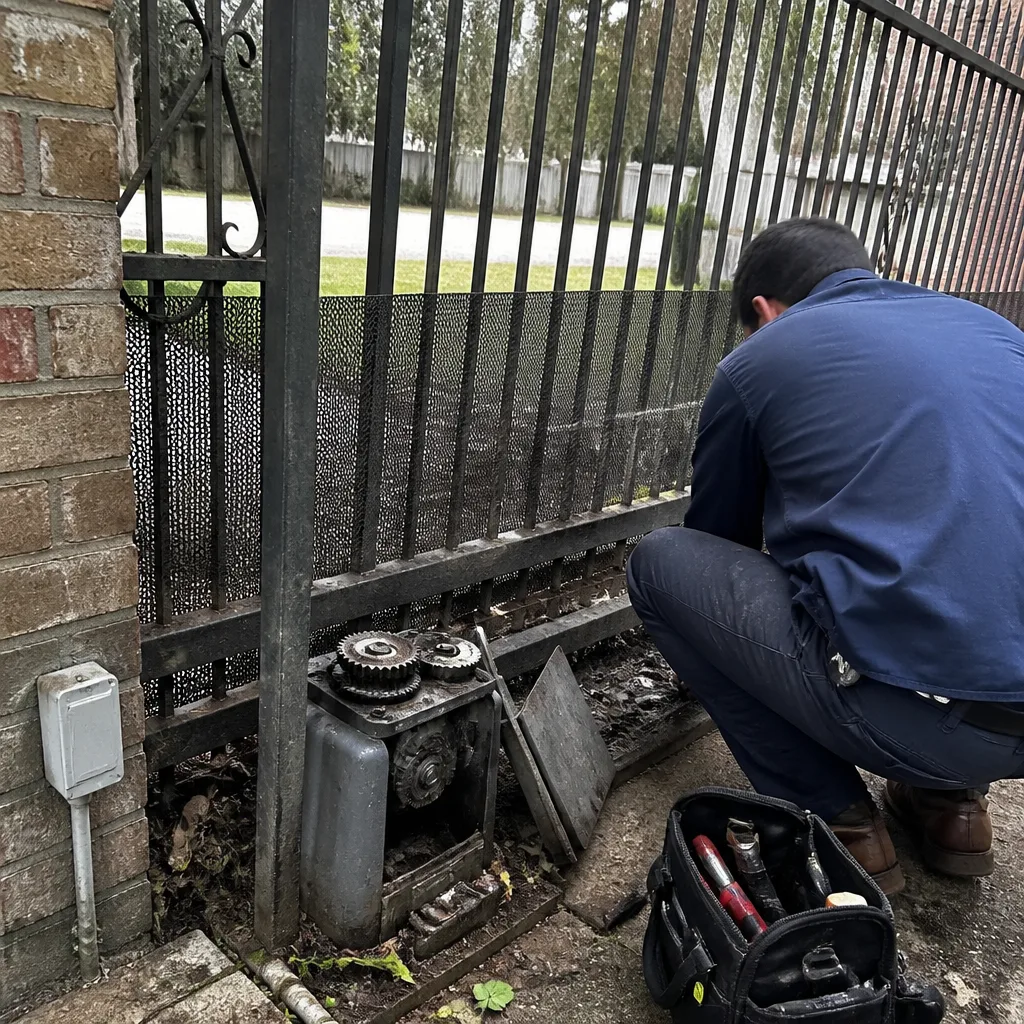 Before
 After
After