
Last updated October 17, 2026
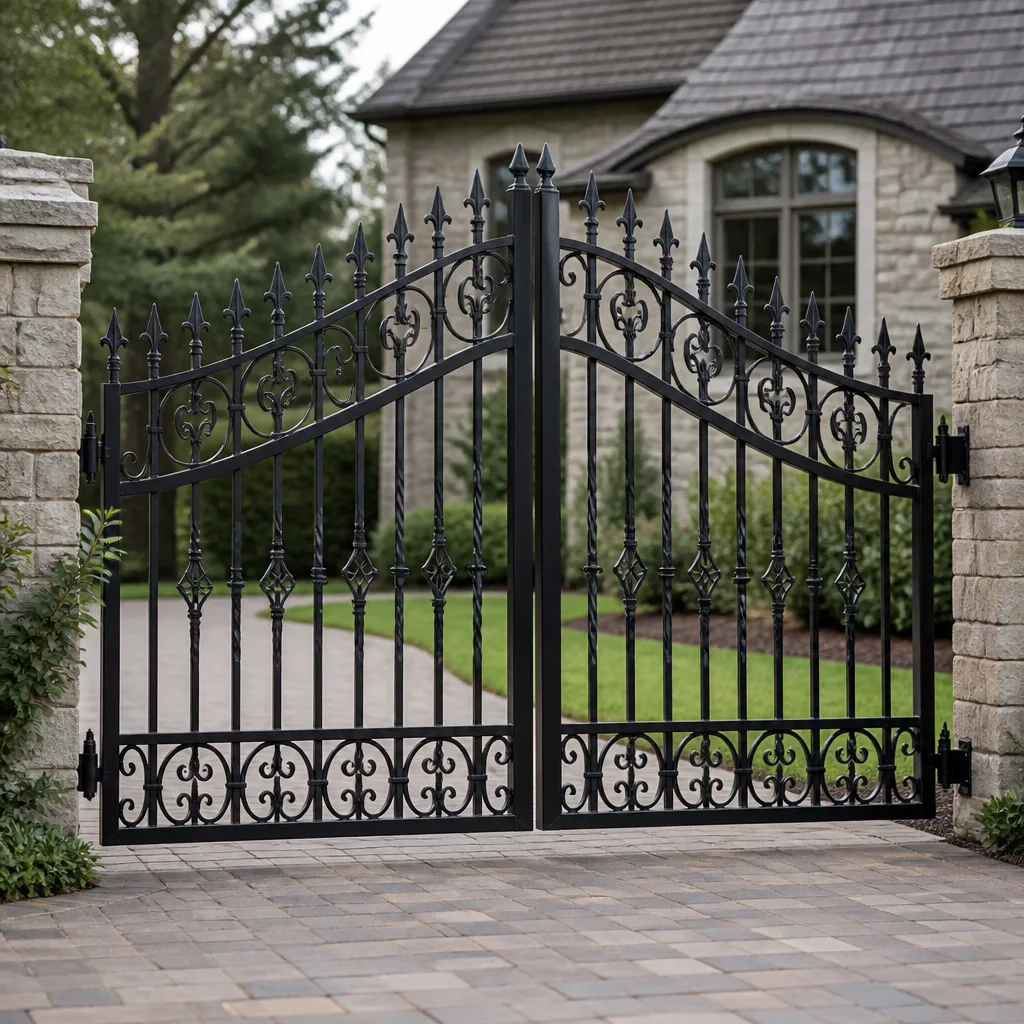 Wrought iron
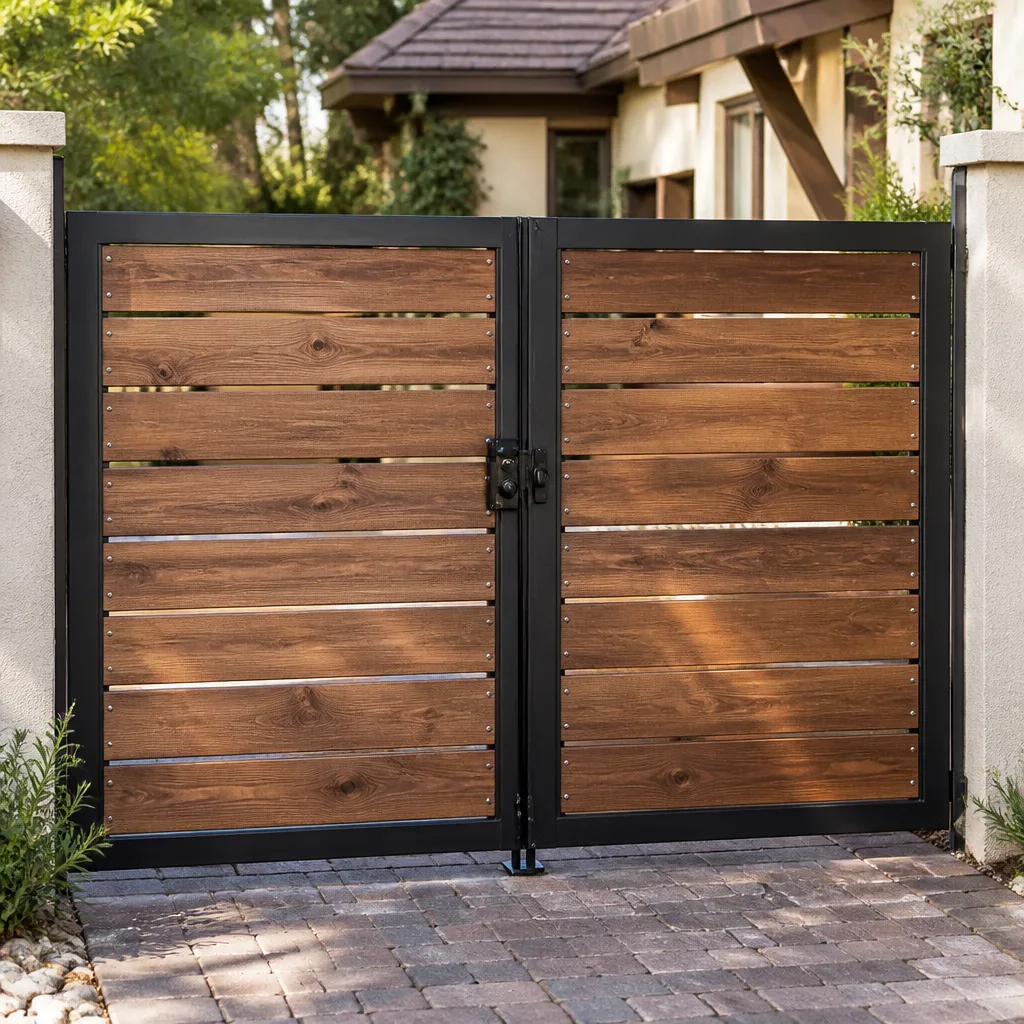 Wood & steel frame
 Farm & ranch
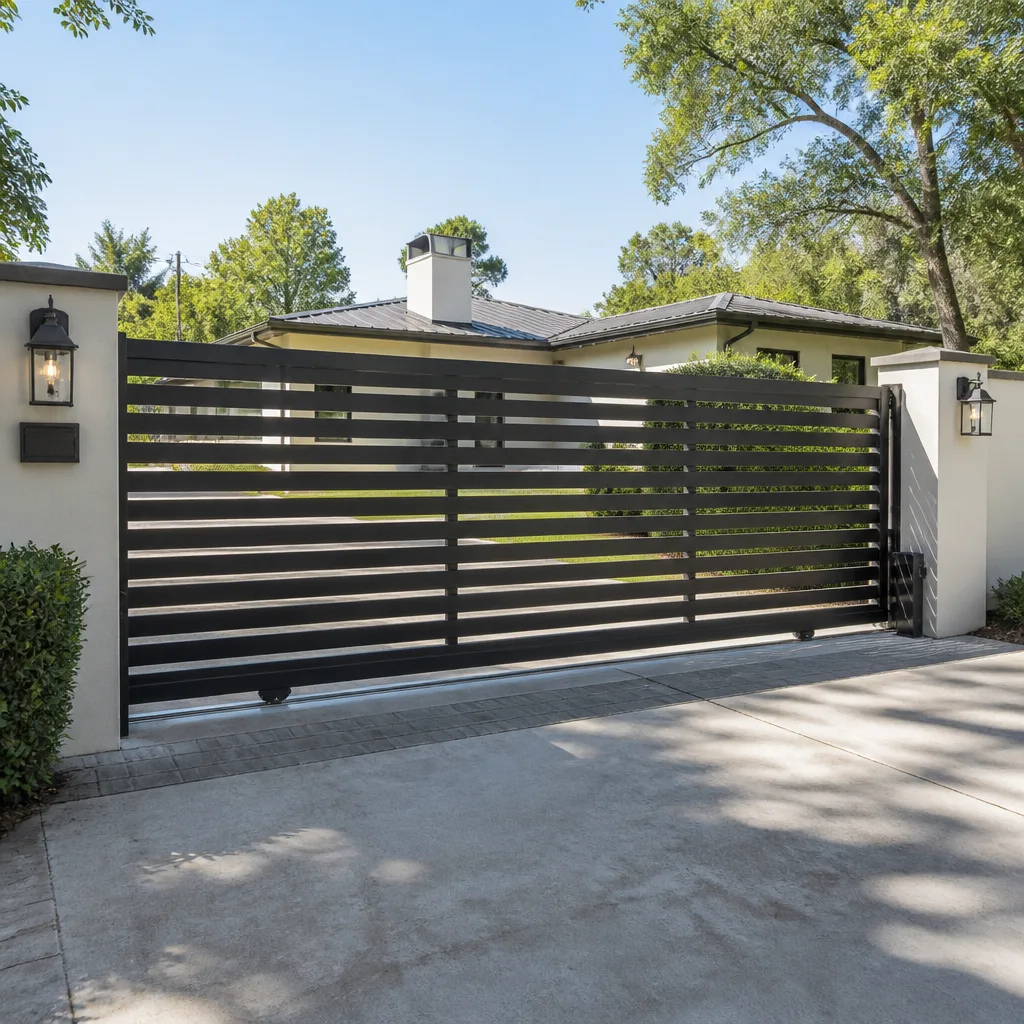 Sliding driveway gates
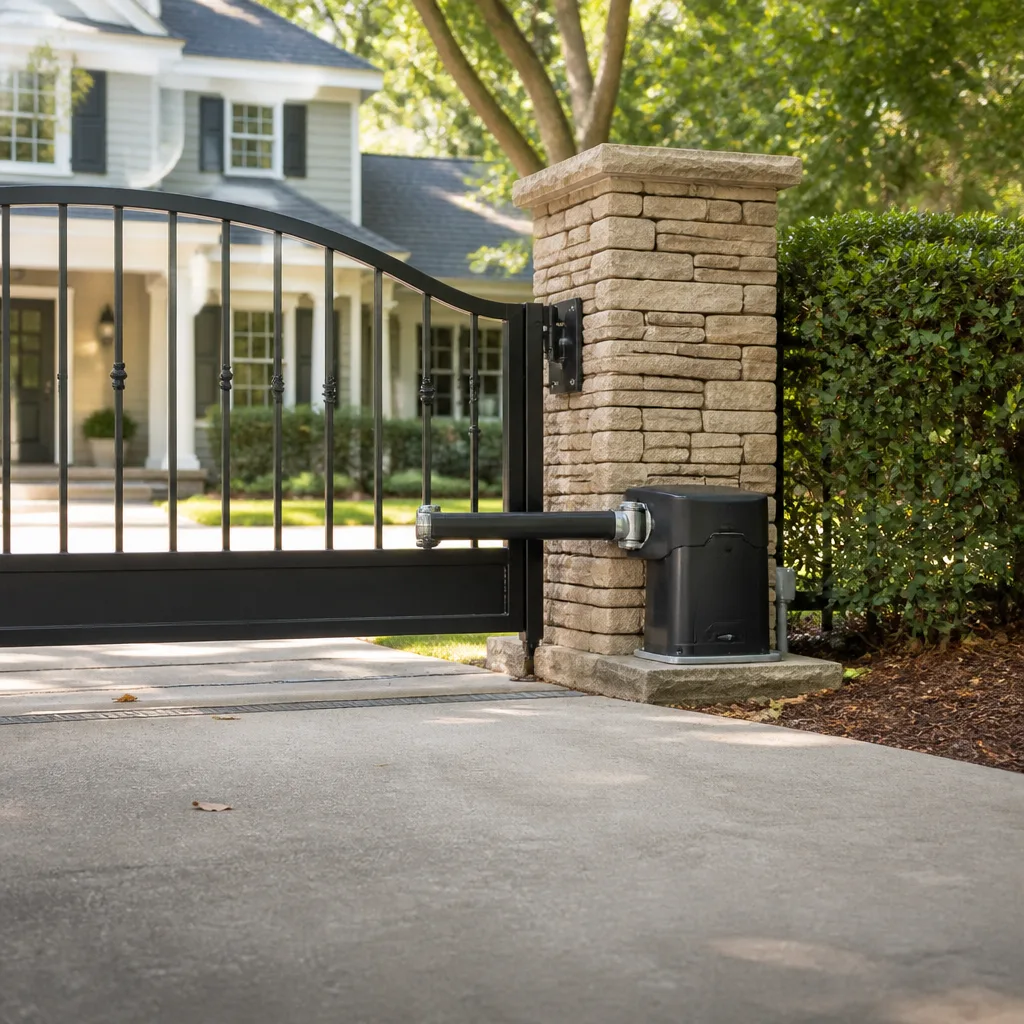 LiftMaster operators
Free on-site gate assessment - hinges, posts, and your LiftMaster or Nice gate operator checked before anything is quoted
The assessment is free and the quote is the invoice.
Get your free estimateGate Repair Permits, Codes & Inspections in TX: What You Need to Know
Here’s a fact most Houston homeowners don’t learn until it’s too late: a $380 gate operator swap beside a backyard pool can technically count as a modification to a pool barrier under Texas Health & Safety Code §757. That single repair, done without paperwork, can void a homeowner’s insurance claim and draw a fine a general contractor will never mention before starting work. This guide draws the exact line between routine repairs that need nothing and alterations that need a permit. You’ll learn what Houston’s code actually says, where HOA rules override city code, what inspectors check, and how to avoid the expensive paperwork surprises.
Quick Answer
Most gate repairs in Houston need no permit at all: replacing a latch, hinge, wheel, picket, or operator on an existing gate counts as maintenance under current code. You need a permit when the work changes the gate’s structure, height, location, or function, when it touches a pool barrier gate, or when a new electric operator is added to a street-facing entrance. HOAs in communities like Katy, Sugar Land, and The Woodlands often impose stricter rules and fees on top of any city requirement. When in doubt, confirm in writing before work begins, and always ask whether the permit is included in the quote.
Styles & brands we work with
Table of Contents
- When a Gate Repair in Houston Needs a Permit
- Houston City Code: Where Repair Ends and Alteration Begins
- Texas Pool Barrier Law and Gate Repairs: The §757 Trap
- How HOAs in Katy, Sugar Land, and The Woodlands Add Another Layer
- Insurance Consequences of Unpermitted Gate Work
- How to Pull a Houston Permit Yourself (Or Have a Contractor Do It)
- Electric Gate Operators: When You Need a Licensed Electrician of Record
- What a Houston Gate Inspection Actually Checks
When a Gate Repair in Houston Needs a Permit
Let’s start with the direct answer, because it’s simpler than most people expect. In Houston, replacing a worn latch, swapping a bent hinge, straightening a sagging post with a steel reinforcement, or installing a new circuit board on an existing operator does not require a permit. These are repairs. The city treats them like changing a faucet washer or replacing a light switch cover. You hire a gate repair technician, the work happens, and nobody files anything with the city.
The line shifts when the work changes what the gate is or how it functions. Adding a gate where none existed? Permit. Increasing gate height from five feet to seven feet? Permit. Widening the opening, moving a post, or changing a swing gate to a slide gate? Permit. Adding an electric operator to a gate that was previously manual, on a driveway that faces the street? Permit, plus an electrical review.
Here’s the practical breakdown we use with Houston homeowners every week:
- Repair (no permit): latch replacement, hinge replacement, wheel and track replacement, picket or panel repair on an existing frame, operator circuit board swap, battery replacement, sensor realignment, keypad wiring repair on an existing system.
- Alteration (permit likely): new gate installation, gate relocation, height increase, material change that affects weight by more than a nominal amount on a pool barrier, new electric operator on a street-facing gate, any work on a gate that forms part of a pool barrier enclosure.
- Gray zone (ask first): modifying an existing gate to accommodate a larger vehicle, changing a manual gate to automatic, replacing a wooden gate with one of a different swing radius, any work where a neighbor’s shared fence or easement is involved.
Houston’s climate adds a wrinkle worth naming. Our clay soil shifts with every wet-dry cycle, which means gates that were perfectly square in 2019 can be binding by 2025. Repairs to address soil movement, like post re-setting with deeper concrete, are still repairs in the city’s view as long as the post returns to its original depth and the gate footprint doesn’t change. Start moving that post two feet to the left, and you’ve crossed into alteration territory.
Houston City Code: Where Repair Ends and Alteration Begins
Houston’s building code doesn’t have a standalone chapter titled “gates.” Gate regulation lives inside the fence and barrier provisions, which reference the International Residential Code the city adopted with local amendments. The key threshold is Section 105 of Houston’s Administrative Code: permits are required for any work that “alters the structure, egress, or fire rating” of a regulated assembly. A gate isn’t a building, but a gate mounted to a fence is regulated under the same general umbrella as that fence. The city’s practical approach, confirmed through years of permit counters and inspector conversations, is that anything that replaces existing components like-for-like is maintenance. Anything that changes dimensions, materials, or operation is an alteration.
There’s also a dollar threshold that surprises people. Houston generally requires permits for fence and gate work above a certain scope, and the scope trigger is often the cost of materials. Small repair projects under the threshold fly under the radar legitimately, not through a loophole, but because the code was written for structural work. Gate repair in Houston work that stays component-level rarely approaches the threshold that triggers a permit review.
What about a gate that’s part of a shared fence line? Houston governs fences on property lines through a specific set of Chapter 10 rules covering height, materials, and placement. If you and your neighbor share a fence and that fence includes a gate, any modification to the gate that changes the fence line requires neighbor notification, and possibly a surveyor’s mark. Most disputes in Houston neighborhoods like Westbury or Oak Forest come from one homeowner replacing a shared gate with something taller or wider without telling the other party first.
Texas Pool Barrier Law and Gate Repairs: The §757 Trap
This section is the reason we wrote this guide. Texas Health & Safety Code §757 requires that every residential pool in the state be enclosed by a barrier, and that barrier must have gates that meet specific standards: self-closing, self-latching, with the latch at least 54 inches above ground, and swinging outward, away from the pool. The code applies whether the pool was built in 1967 or 2023. It applies in Houston, Katy, Bellaire, and every other city in Texas.
Here’s the trap. If you have a gate that’s part of your pool barrier, and you repair or replace it with hardware that doesn’t meet those three standards, you’ve technically created a code violation. The repair itself didn’t need a permit, but the outcome you’ve created is noncompliant. An insurance adjuster investigating a pool incident will check exactly this. They’ll ask whether the gate was self-closing and self-latching at the time of the incident, and if your repair changed that, your claim is in trouble. This is the fact almost no general contractor will volunteer before starting work, because it makes the job more expensive and requires parts they may not stock.
What should a Houston homeowner do when the pool gate needs work? First, confirm the existing gate is compliant before the repair begins. Second, if any part of the repair touches the closing mechanism, the latch, or the swing direction, specify in writing that the finished gate must meet §757. Third, understand that after-market spring hinges and self-latching hardware are often more expensive than standard parts, and that’s why bids vary. When we replace pool gate hardware in Houston, we carry UL-listed self-latching hardware as standard for any gate within 20 feet of a pool enclosure, because guessing is expensive.
Here’s a point most competitors miss: the §757 standards are retroactive. The code wasn’t in place when many Houston homes were built, but compliance isn’t grandfathered. If your pool gate was built in 1985 with a simple thumb latch at 40 inches, it’s been out of compliance since the law took effect. A repair is the right moment to fix that, and a qualified gate technician should point it out even when the customer didn’t ask. We do, and we write it on the estimate.
How HOAs in Katy, Sugar Land, and The Woodlands Add Another Layer
Houston is famously unzoned, which means much of the city relies on private deed restrictions and HOA covenants to govern what zoning does elsewhere. For gates in master-planned communities, the HOA’s architectural review committee is often the most restrictive authority you’ll deal with. Katy communities like Cinco Ranch and Firethorne, Sugar Land communities like First Colony and New Territory, and every village in The Woodlands have design standards that go beyond Houston code.
What does that mean practically? You might replace a gate with an identical one, no city permit needed, and still owe your HOA an architectural modification request, a $100 fee, and a 30-day review window. HOAs in these communities typically govern:
- Gate material: many require wood or wrought-iron style, never vinyl or chain-link, even in the backyard.
- Gate color: Sugar Land communities often require specific paint colors matched to HOA palettes, not just any white or black.
- Gate height and width: The Woodlands sets maximum heights and requires side yards to maintain setbacks.
- Operator placement: where a motor housing can be mounted, whether it must be screened by landscaping.
- Noise limits: several Katy HOAs specify decibel limits for motorized gates on shared fence lines.
We’ve seen a homeowner in Cinco Ranch replace a perfectly functional gate with a nicer one, only to receive a violation letter for not submitting the modification form. The gate was compliant with Houston code, and the HOA still fined them $250. The fix took six weeks of back-and-forth because the final approval had to go through a committee that meets monthly. If you live in a deed-restricted community, start with your HOA’s design review process before you pick a gate.
Insurance Consequences of Unpermitted Gate Work
This is the quiet part most guides won’t say out loud. Houston homeowners insurance policies contain language requiring that any work on the property comply with applicable law and code. When you file a claim, the adjuster’s job is to find a reason the damage isn’t covered. Unpermitted work that contributed to the damage is a documented reason. It’s not theoretical. Texas Department of Insurance complaint records include cases where pool-related injury claims were reduced or denied because the gate latch had been replaced with non-§757 hardware, and no permit was pulled.
The liability doesn’t end with your own claim. If a guest’s child is injured in your pool, and your gate was modified in a way that violates §757, your personal liability exposure grows significantly. A plaintiff’s attorney will subpoena maintenance records, ask who did the repair, and confirm whether hardware met the standard at the time of the incident. The absence of a permit isn’t conclusive, but it’s evidence of a process failure. In Texas, that’s often enough to shift a settlement negotiation.
There’s a flip side worth naming. A documented repair with the right hardware, a written estimate, and a photo of the finished work strengthens your position in any claim. We photograph every repair we complete in Houston, including the hardware, the swing direction, and the latch height on pool gates. That documentation has value if a claim ever comes. It costs nothing, and it’s part of our standard service, not an add-on.
The practical rule for homeowners: if the work needs a permit and you skip it, you’re betting the cost of the permit against your insurance coverage. The permit fee in Houston is typically under $100 for residential gate work. The coverage you’re risking is often hundreds of thousands. It’s a cheap insurance policy to do it right.
How to Pull a Houston Permit Yourself (Or Have a Contractor Do It)
Pulling a permit in Houston for gate work is straightforward once you know which counter to visit. The city uses an online portal through Houston Permitting Center, and residential fence and gate permits are classified under the miscellaneous structures category. Here’s the process, step by step:
- Confirm you actually need one. Component replacement on an existing gate doesn’t require a permit in most cases. New gates, structural changes, or pool barrier modifications do. When in doubt, call the Houston Permitting Center and describe the work. They’ll tell you in five minutes.
- Gather the paperwork. You’ll need a site plan or survey showing the gate location, setbacks from property lines, and distance from any pool. If the gate is part of a fence on a property line, you’ll need neighbor consent in writing for anything that changes the shared fence.
- Submit the application online. Houston’s iPermits system accepts fence and gate permit applications. The fee is based on project valuation, and most residential gate permits run between $50 and $150.
- Wait for review. Most gate permits in Houston are approved in 7-10 business days, assuming the drawings are clear and the structure is straightforward. Pool barrier work may trigger a health department review, which adds a few more days.
- Post the permit and schedule inspection. Once approved, the permit must be posted on the property during work. After completion, you schedule an inspection through the online portal.
- Pass inspection and close the permit. The inspector checks the gate against the submitted plans and the applicable code sections. For pool gates, the inspector confirms §757 compliance: self-closing, self-latching, correct latch height, outward swing.
Should a contractor pull the permit instead? In many cases, yes. A licensed contractor with Houston experience knows which counter to file at, what drawings the reviewer wants, and what inspectors fail on the first visit. When you hire Latch and Post Gate Repair Houston, we handle permits as part of the installation when one is required, and we never charge a hidden markup for the service. The permit fee is a line item on the written estimate, and you see it before work begins.
Electric Gate Operators: When You Need a Licensed Electrician of Record
Adding an electric operator to a gate changes the scope of the permit conversation in Houston. A mechanical gate repair is a fence and barrier matter. An electric operator involves low-voltage wiring, possibly line-voltage power, and control systems. Houston code requires that any electrical work beyond the simplest component replacement be done by or under the supervision of a licensed electrician. That means if you’re adding a new electric gate operator where none existed, the permit application will ask for an electrician of record.
What does “electrician of record” mean practically? It means a licensed Texas electrician whose name is on the permit as responsible for the wiring installation. They don’t have to be the person who mounts the operator arm, but they must sign off on the power run, the disconnect, and the bonding. For a street-facing gate with a LiftMaster or FAAC operator, this is standard practice. The electrician pulls the wire from the nearest circuit, installs the weatherproof disconnect and conduit, and certifies that the installation meets NEC Article 300 for outdoor wiring.
Here’s where it matters for homeowners. If you hire a contractor who says they’ll handle the electrical work themselves but they aren’t a licensed electrician, the city will likely reject the permit application or fail the inspection. You’ll pay twice to fix it. Some handyman operations in Houston will skip the permit entirely and wire the operator anyway. The gate works for a while, and then the wrong wire gauge overheat, corrode in our humidity, or fail a claim inspection after a storm. When we install operators in Houston, we use a licensed electrician of record for every new circuit, and the name appears on the permit application. It adds a fee, and it’s worth it.
Replacing an existing operator on a gate that already has a power run is different. Swapping a dead LiftMaster for a new one, using the same conduit and wiring, generally doesn’t require a new electrical permit as long as the circuit rating doesn’t change. If you’re upgrading from a basic operator to a higher-powered model, confirm the wire size and breaker rating with your technician before buying.
What a Houston Gate Inspection Actually Checks
If your gate work required a permit, the final inspection is the last step before the project closes. Here’s what the inspector will actually look at, based on what we see pass and fail on Houston job sites:
- Post depth and footing. Houston inspectors know our soil moves. They check that gate posts are set below frost line and at the depth specified in the approved plan, with concrete footings that won’t heave with the clay.
- Setbacks and property lines. The gate must sit where the submitted site plan says it sits. If it’s three feet closer to the neighbor’s fence than drawn, that’s a fail.
- Gate swing direction. On a pool barrier, the gate must swing outward, away from the water. This is the single most common inspection failure in Houston, and it’s avoidable.
- Latch height and type. For pool gates: latch at least 54 inches above grade, self-latching, with no opening mechanism accessible from the exterior of the gate by a small child.
- Electrical work. If the permit includes an operator, the inspector will check for a weatherproof disconnect, proper conduit burial depth, and GFCI protection on the circuit.
- Grade and drainage. The gate must swing freely across the finished grade, with no binding and no water pooling at the base of the posts.
A typical Houston gate inspection takes 15-20 minutes and is scheduled through the city’s online portal. We’ve found that inspections fail most often for two reasons: the latch height on a pool gate, and the swing direction. Both are easy to get right the first time if the technician knows what the inspector is checking. That’s one reason we install gates in Houston to §757 standards even when the gate isn’t near a pool. It’s good practice, and it protects the homeowner whether or not an inspector ever looks at it.
Common Mistakes to Avoid
- Assuming every gate job needs a permit. Most component repairs don’t. Paying for a permit you don’t need wastes money and adds weeks to a simple latch replacement. Confirm before you apply.
- Assuming no gate job ever needs a permit. New gates, structural changes, and pool barrier work often do. The homeowner who installs a taller gate without asking discovers the problem during a refinance appraisal or an insurance claim.
- Replacing pool gate hardware with standard parts. A regular latch at 40 inches on a pool gate violates §757 the day it’s installed. Your gate closes, but your liability doesn’t. Buy the right hardware with the right rating.
- Skipping the HOA review in a deed-restricted community. Houston’s no-zoning culture means HOAs are the real enforcement body in places like Katy and Sugar Land. A $75 modification fee beats a $350 violation notice and a committee hearing.
- Letting an unlicensed person wire an electric operator. A gate arm that closes on a child because the safety sensor was wired wrong is a scenario no family should ever face. The wiring matters, and the electrician of record is your liability shield.
- Not documenting the finished work. Photos of the latch, the swing, and the hardware, plus a copy of the permit if one was pulled, are your insurance claim’s best friend. If your contractor won’t provide them, find another contractor.
See the difference
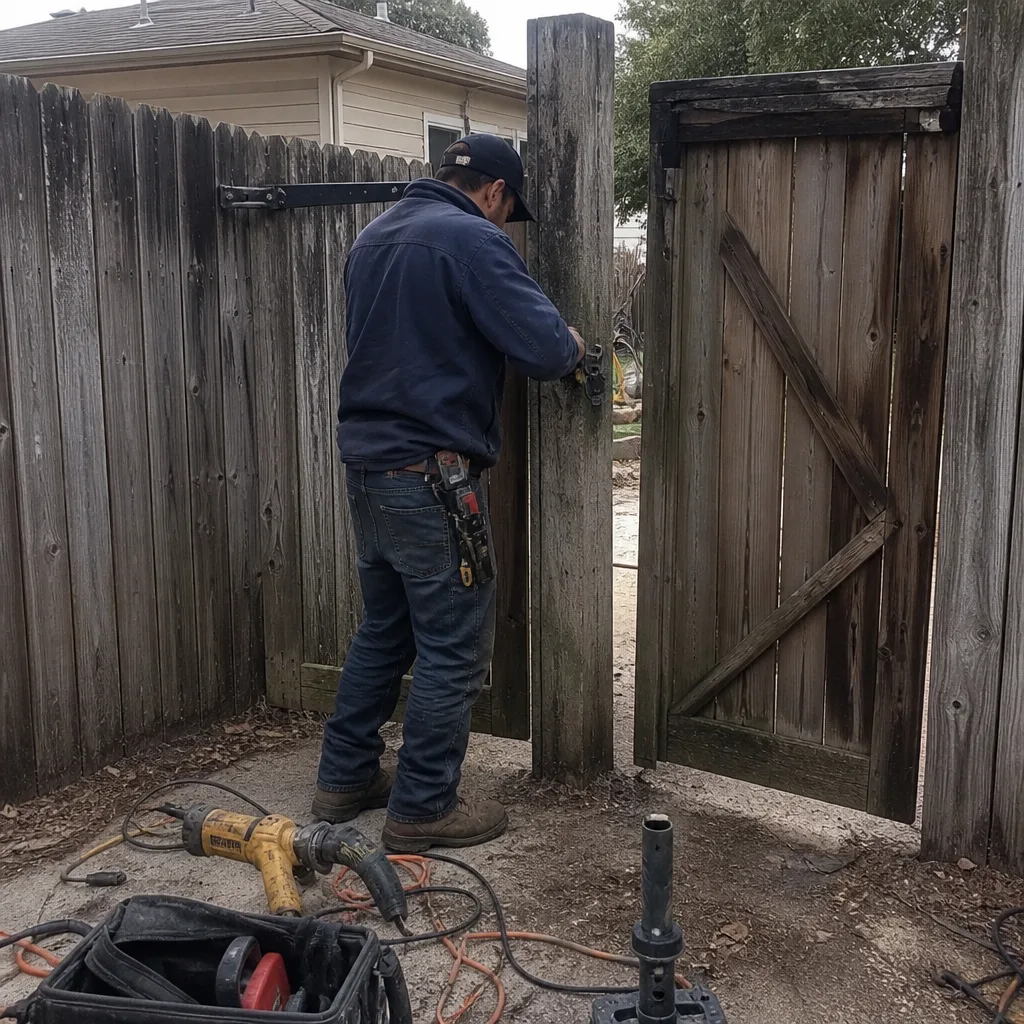 Before
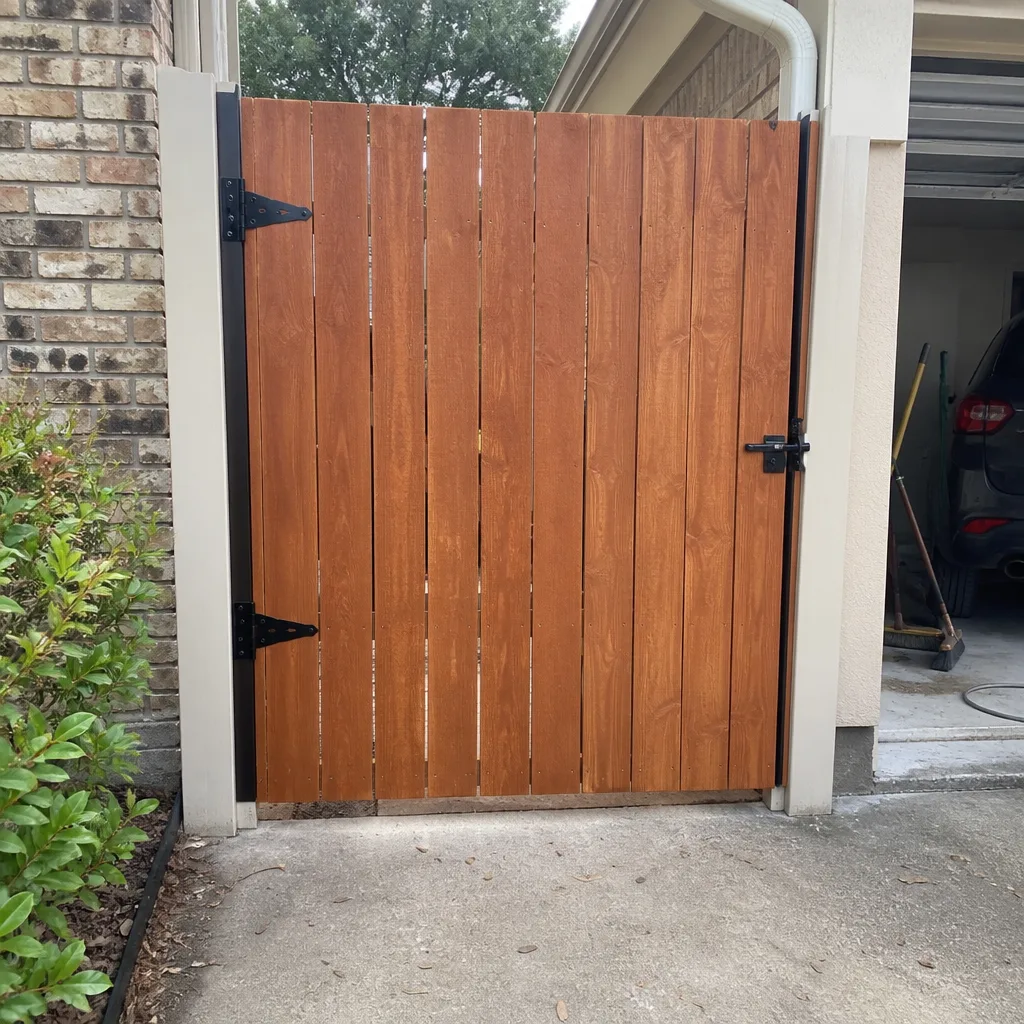 After
After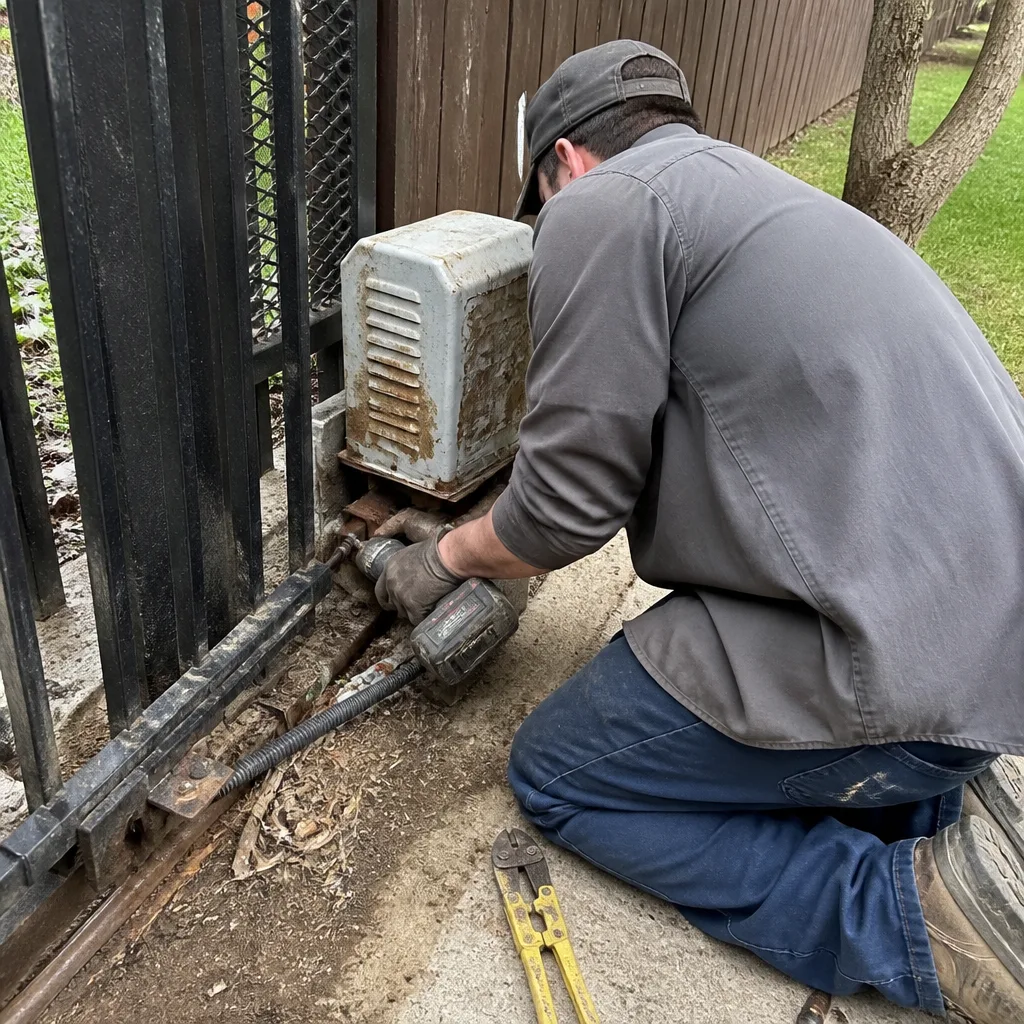 Before
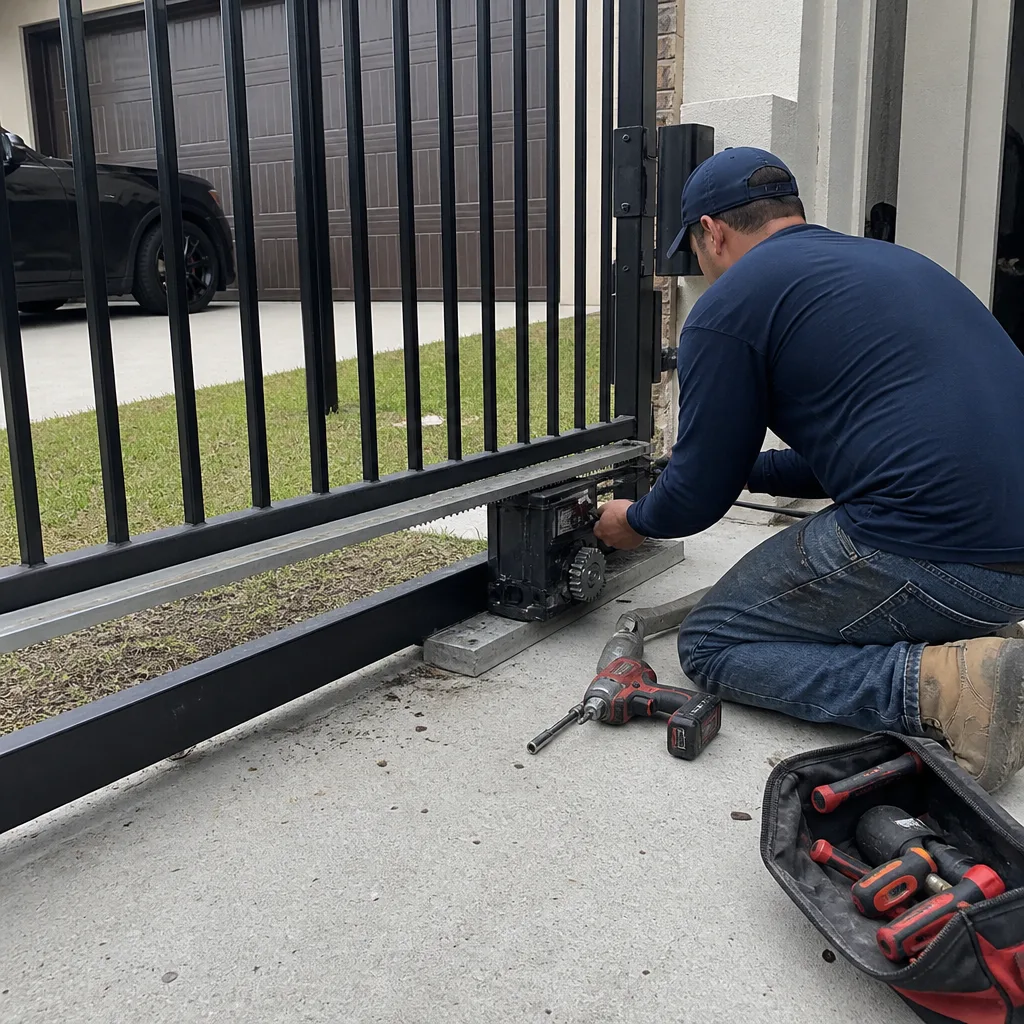 After
After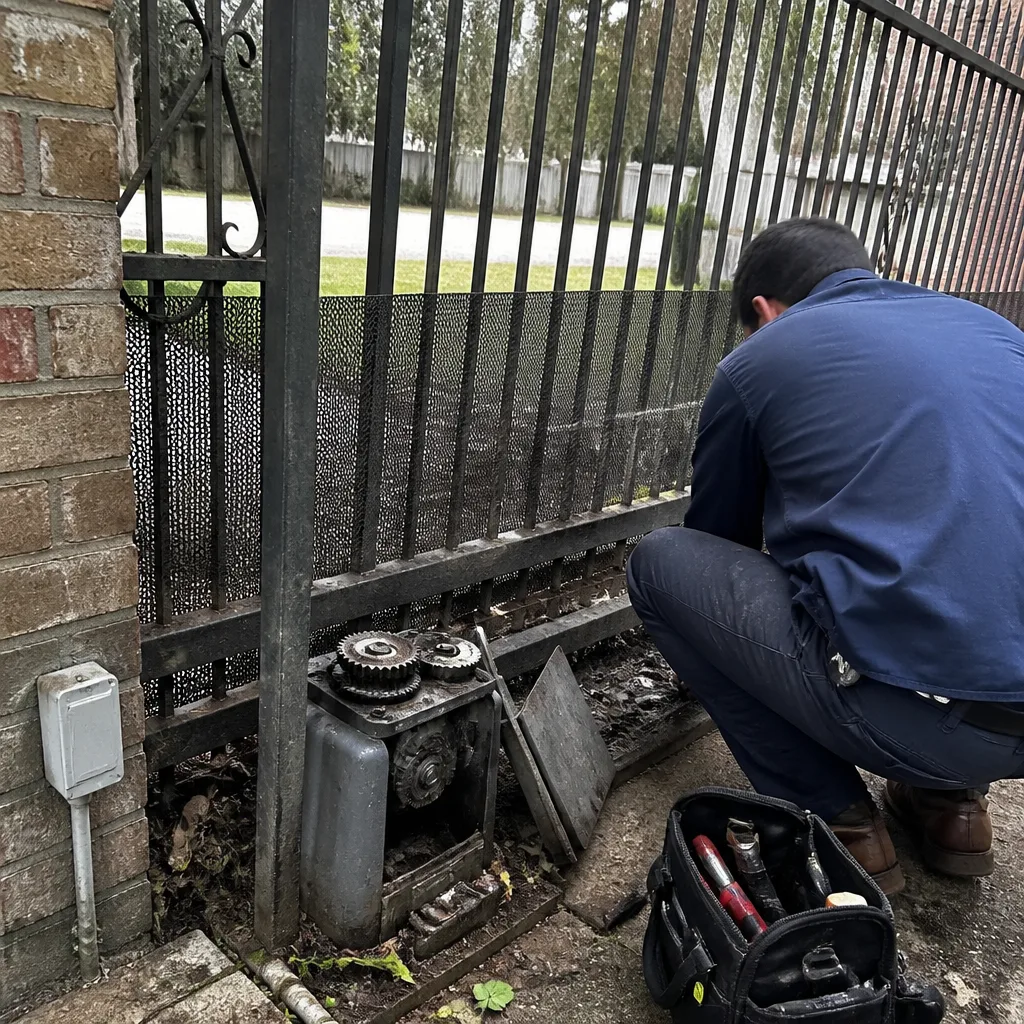 Before
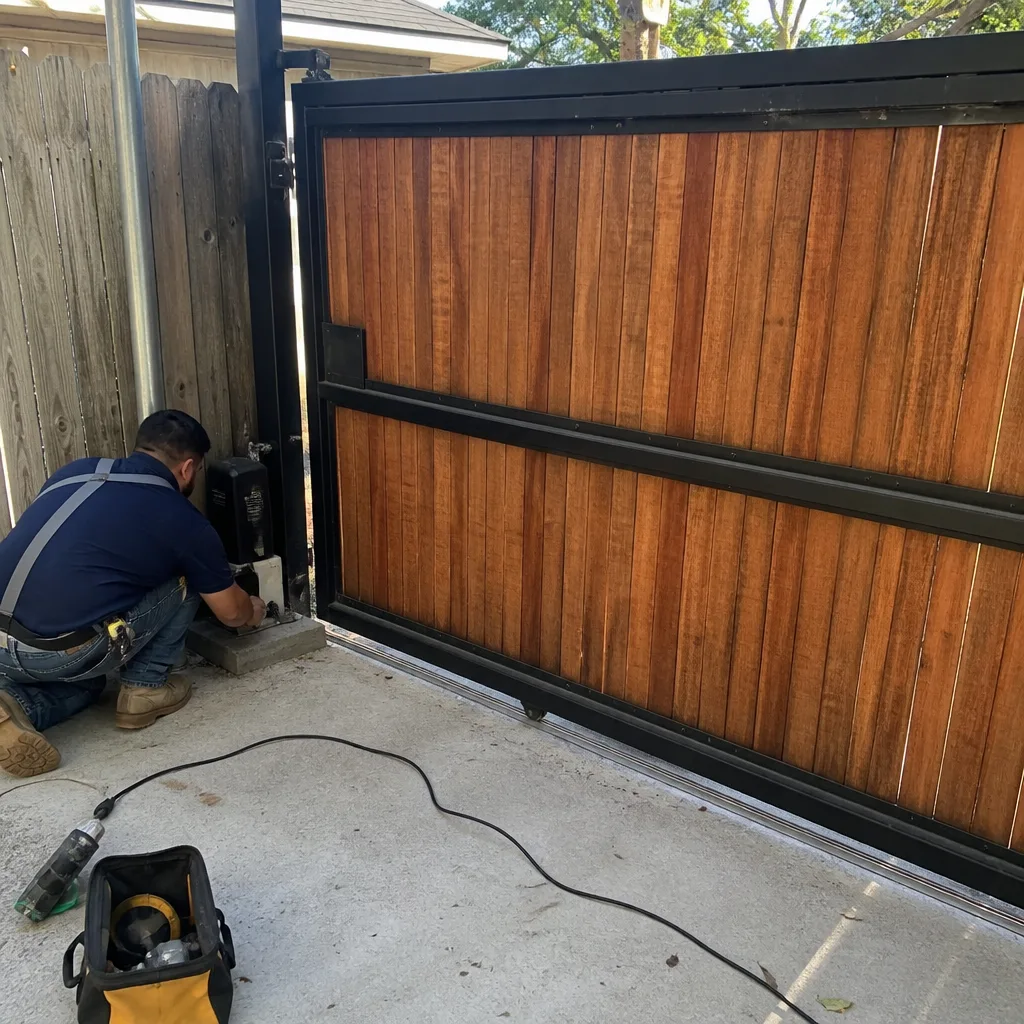 After
AfterWhen to Call a Professional
Some gate work in Houston is genuinely DIY-friendly: replacing a gate latch that matches the old one, tightening a sagging hinge, adjusting a Ghost Controls sensor. The moment the work involves a pool barrier, an electric operator, a structural post, a property line, or an HOA requirement, call a professional. For Gate Repair Warning Signs: A Houston Homeowner’s Reference Guide on knowing when to act, see our blog. The stakes aren’t just cosmetic. A gate that fails to close is a pool safety hazard, a kid-and-pet escape route, and an insurance problem waiting to surface. Latch and Post Gate Repair Houston offers free estimates throughout Houston, and we’ll tell you honestly whether your job needs a permit or just a new set of hinges. Call (361) 256-5955, and a live person answers, day or night.
Frequently Asked Questions
Replacing an existing gate opener with a like-for-like model on a gate that already has a power run usually doesn’t require a permit, as long as the circuit rating doesn’t change. Adding an opener to a gate that was previously manual, especially on a street-facing entrance, does require a permit and an electrician of record. Call (361) 256-5955 if you’re not sure which category your job falls into. We’ll check before any work begins.
Every gate in a Texas pool barrier must be self-closing, self-latching, with the latch at least 54 inches above grade, and the gate must swing outward, away from the pool. These requirements are retroactive, meaning older pool gates must be brought into compliance even if they predate the law. If your Houston pool gate doesn’t meet these standards, a repair is the right time to fix it.
Yes, if the gate is a simple replacement on an existing post, at the same height and width as the original, with no new electric operator. No, if the gate is new construction, changed in dimensions, part of a pool barrier, or on a shared property line. Houston’s permit threshold turns on alteration versus maintenance, and the safest way to confirm is a five-minute call to the Houston Permitting Center or to our office.
Yes, and in many cases the HOA’s rules are stricter than Houston code. Master-planned communities in Katy, Sugar Land, and The Woodlands often regulate gate material, color, height, width, and even operator noise. Check your HOA’s architectural review requirements before you buy a gate. The modification fee is usually under $100, and the fine for skipping it is often several times that.
Coverage depends on whether the unpermitted work contributed to the damage or injury at issue. If a noncompliant pool gate latch is found after an incident, your claim may be reduced or denied. Document every repair: photos of the hardware, the swing direction, and the completed work. It’s your evidence if a claim ever lands on your driveway. Estimates from Latch and Post Gate Repair Houston are free, and the documentation is part of the job.
Most residential gate permits in Houston run between $50 and $150, depending on the project valuation and whether electrical work is included. Pool barrier work may trigger an additional health department review fee. The permit fee is a line item on every quote we write, and you’ll see it before any work is scheduled.
The Bottom Line
Houston gate repair permits hinge on one distinction: repairs don’t need them, alterations do. The confusing part isn’t the city code. It’s the overlap with Texas pool barrier law, HOA covenants in communities like Katy and Sugar Land, and insurance policy language that nobody reads until a claim is filed. The fix is simple. Confirm whether your work needs a permit before you buy materials. Pull it or have your contractor pull it. Document the finished work with photos and a written estimate. If you’re anywhere near a pool, buy §757-compliant hardware even if it costs $30 more. A gate is a small detail until it’s a liability. Treat it carefully from the start.
Written by Cody Beckman, Owner at Latch and Post Gate Repair Houston, serving Houston since 2009.