
Last updated October 17, 2026
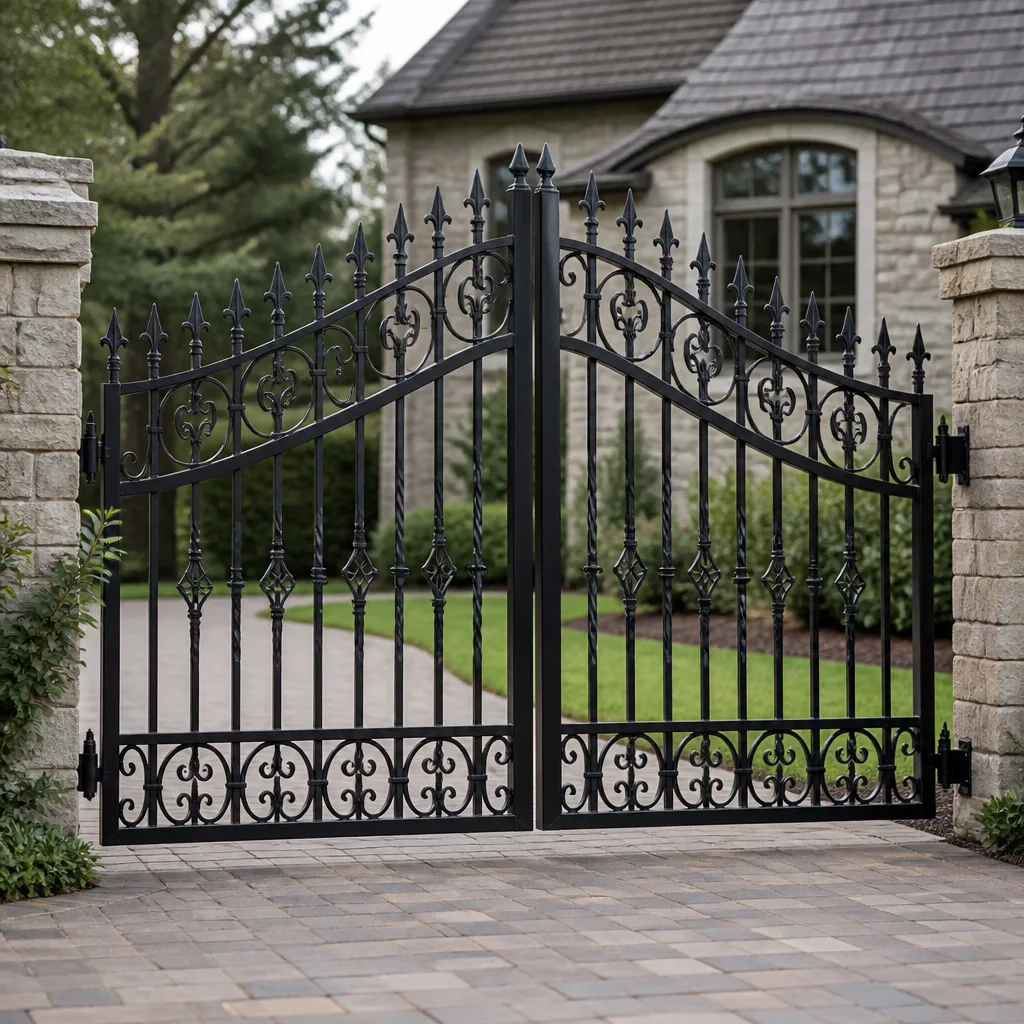 Wrought iron
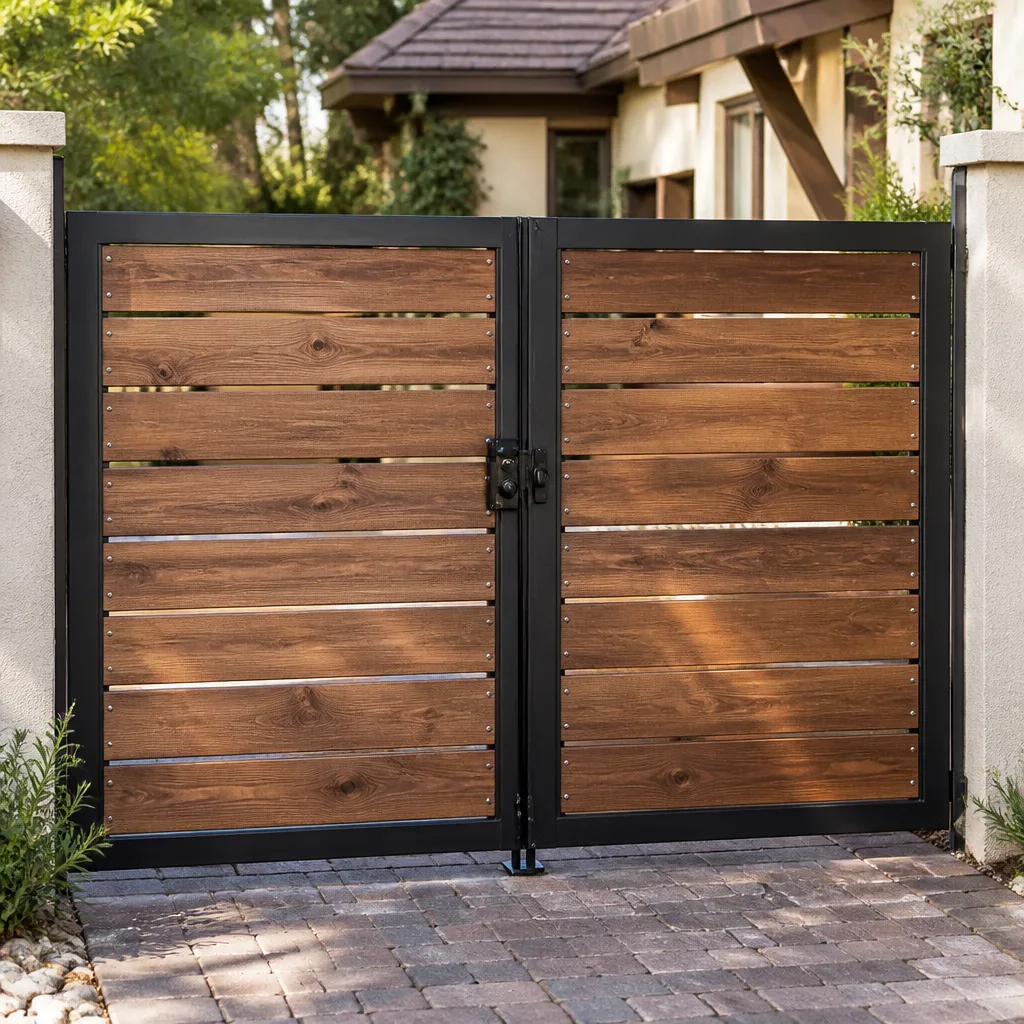 Wood & steel frame
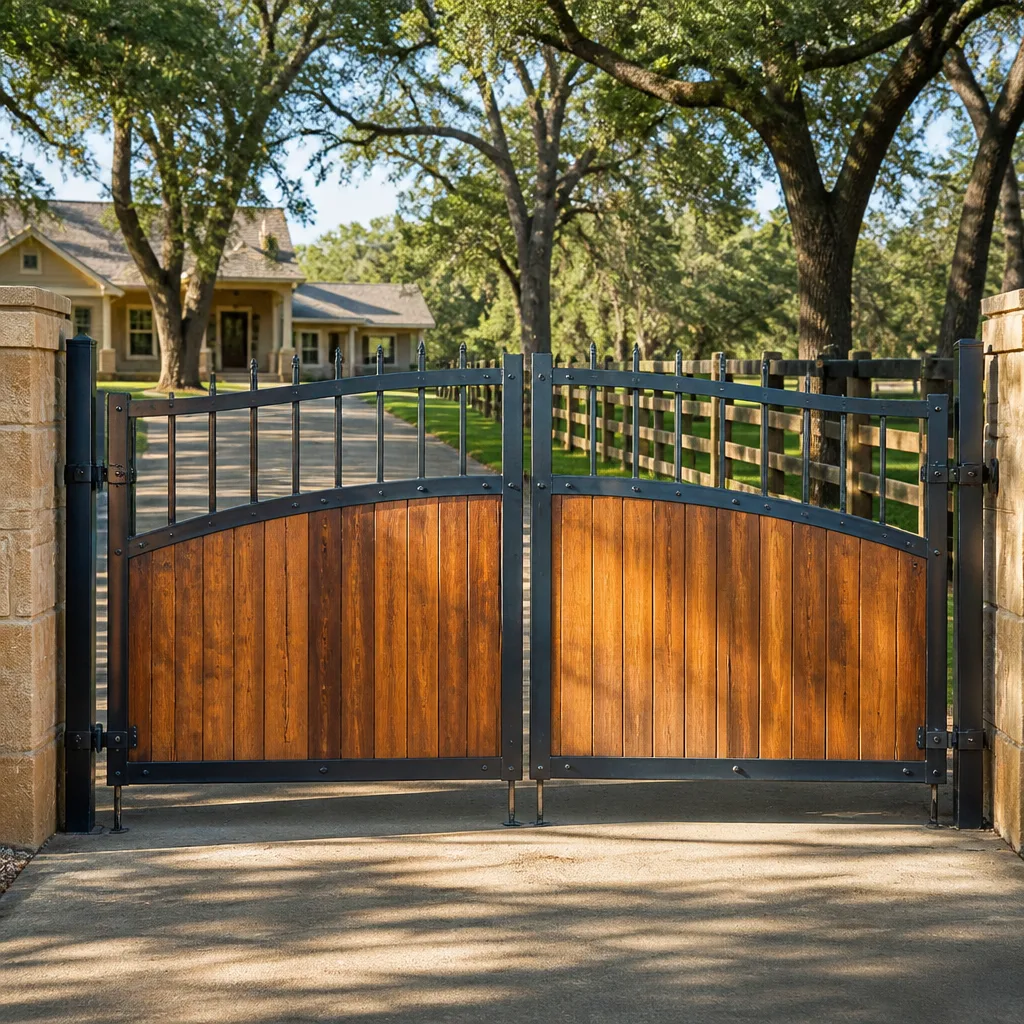 Farm & ranch
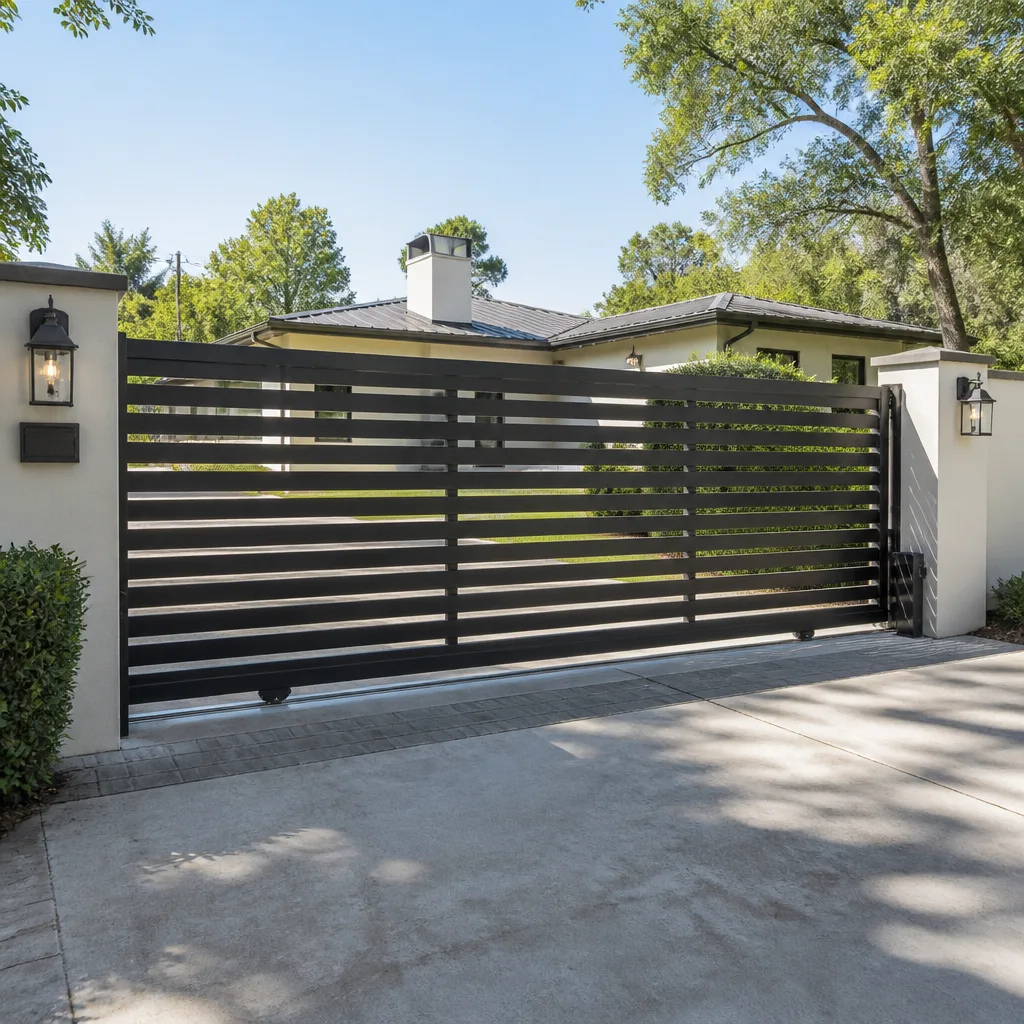 Sliding driveway gates
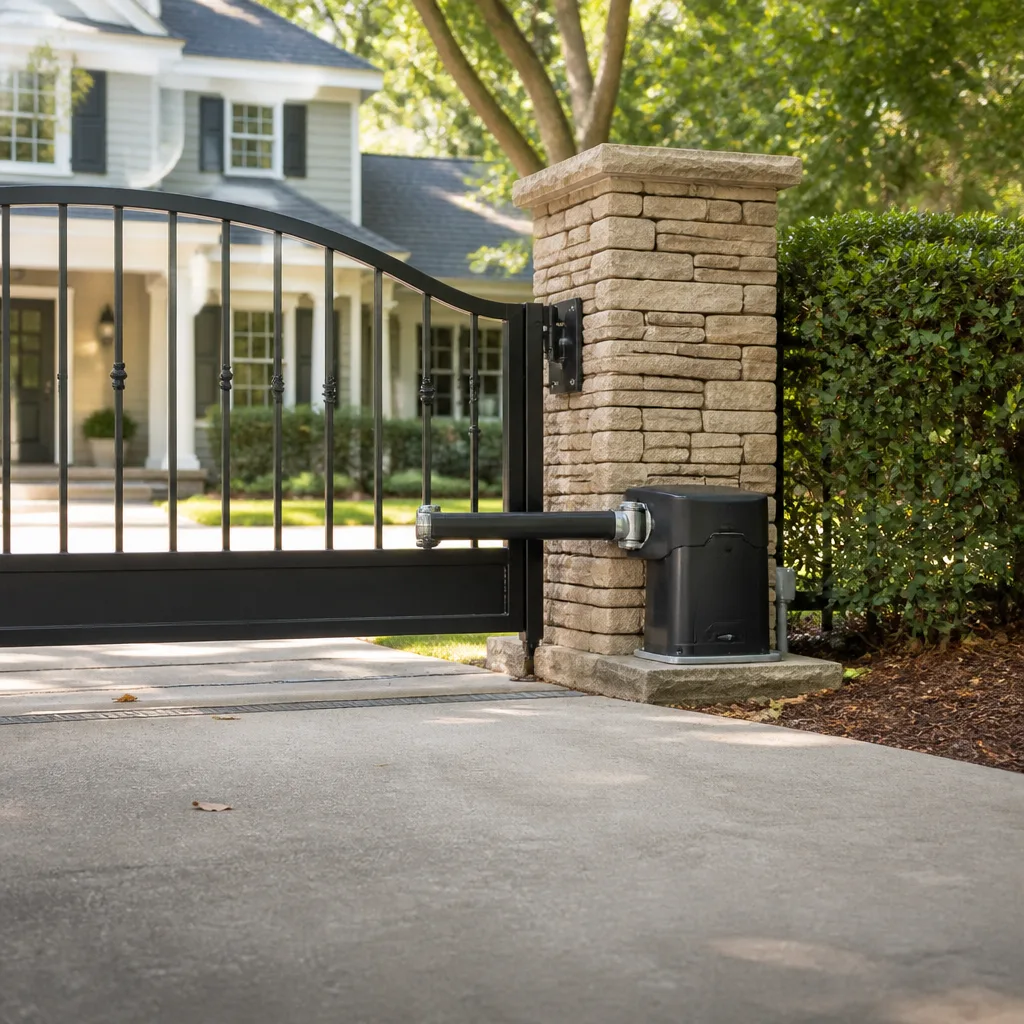 LiftMaster operators
Free on-site gate assessment - hinges, posts, and your LiftMaster or Nice gate operator checked before anything is quoted
The assessment is free and the quote is the invoice.
Get your free estimateGate Repair Maintenance Checklist for Houston Homeowners
A can of WD-40 applied to a Houston gate hinge in July will be completely gone by September. The humidity and heat volatilize light lubricants faster here than nearly anywhere in the continental United States, leaving metal-on-metal contact that scores the hinge barrel within a single season. Most maintenance checklists floating around the internet are written for dry climates and mild summers. They skip the two tasks that actually matter most in Houston: checking for post heave after a heavy rain cycle, and lubricating hinges with a product that won’t wash away or evaporate in 90-degree heat with 80 percent humidity. This guide is organized by what Houston weather actually does to gates, month by month, so you’re checking the right things at the right time.
Quick Answer
A complete Houston gate maintenance checklist covers three timeframes: monthly visual inspections of hinges, posts, and latches; quarterly lubrication with a heavy-duty, non-evaporating lubricant like Lucas Oil Heavy Duty or Super Lube; and annual deep checks that include post level verification, frame drain clearing, and electric operator battery testing. In Houston specifically, you’ll also need to inspect for post heave after extended rain events and check the three water-pooling spots on the underside of horizontal gate frames that most homeowners never see until the frame fails.
Styles & brands we work with
Table of Contents
- The Monthly Houston Gate Checklist
- Lubricants That Survive Houston Humidity (And Ones That Don’t)
- Post Heave: The Houston Problem Nobody Talks About
- The Three Places Water Hides on Your Gate Frame
- Electric Gate Operator Maintenance for Houston Power Patterns
- Houston’s Seasonal Maintenance Calendar
- Wood Gate Care in Houston’s Wet-Dry Cycle
- Common Mistakes to Avoid
- When to Call a Professional
- Frequently Asked Questions
The Monthly Houston Gate Checklist
Fifteen minutes a month is enough to catch most gate failures before they become expensive. The trick is knowing what to look at and what to skip. In Houston, we’ve found that homeowners who do a quick monthly walk-around tend to catch hinge wear, latch misalignment, and operator fatigue six to twelve months before someone who waits for the gate to stop working. Here’s what we recommend checking every month.
- Lift the gate by the latch side and feel for sag. A gate that has dropped even a quarter inch puts uneven pressure on hinges and latch hardware. If the latch doesn’t line up smoothly anymore, that’s your first sign of hinge wear or post movement.
- Open and close the gate through its full range of motion. Listen for grinding, squealing, or clicking that wasn’t there last month. Watch whether it moves smoothly or catches at a specific point. A catch usually means a hinge pin is scoring or the frame has shifted slightly.
- Check all hinge fasteners with a wrench or socket. Galvanized bolts on external hinges work loose over time with temperature swings. Houston’s freeze-thaw cycle in winter, mild as it is, still expands and contracts metal enough to back bolts out of wood and steel posts.
- Inspect the latch and striker plate alignment. If you have to lift or push the gate to get the latch to engage, don’t ignore it. The added friction wears the latch tongue and eventually bends the striker plate. Latch repair is one of the most common calls we get at Latch and Post Gate Repair Houston, and almost always it could have been caught months earlier.
- Clear debris from the bottom track or ground path. Houston oak leaves, pine needles, and the occasional crawfish mound will catch under a rolling gate and force the operator to work harder. For a swing gate, make sure grass and soil haven’t built up on the arc of travel.
- Look at the gate’s bottom edge for rot or rust. On a wood gate, the bottom rail sits closest to the ground and stays damp longest after rain. On a metal gate, the same bottom rail collects water on its inside face. You’re looking for soft wood, bubbling paint, or flaking rust.
One thing we tell every homeowner: don’t skip the visual check in winter. Houston’s January freezes don’t last long, but frozen hinges with existing moisture in them expand and can crack cast hangers. A one-minute look each month through January and February saves a full hinge replacement in March.
Lubricants That Survive Houston Humidity (And Ones That Don’t)
Lubrication is the single highest-impact maintenance task for a Houston gate, but most people use the wrong product and think they’ve done the job. Here’s the short version: light spray lubricants like standard WD-40 are penetrants, not lubricants. They free up a stuck hinge temporarily, then evaporate. In Houston’s heat, that process takes about 60 days. A hinge that gets WD-40 in April will be dry and scoring by June. We’ve seen hinge barrels worn into ovals because the gate kept moving with no lubricant film between the pin and the hinge body.
What actually holds up in Houston’s climate:
- Lucas Oil Heavy Duty Grease or Super Lube Multi-Purpose Grease. These are lithium-complex or PTFE-based greases that stay in place and resist washout. They’re thick enough not to run in 100-degree direct sun, and they don’t emulsify under repeated rain exposure.
- Marine-grade lithium grease. Designed for boat trailers and saltwater environments. If your gate is within a mile of Galveston Bay or on a canal, this is worth the extra few dollars because it’s formulated for constant moisture.
- Graphite or PTFE dry lubricant (spray type). Available at most auto parts stores, and the powder film bonds to hinge metal without being washed away. This works especially well on gate latch internals and key cylinders, where grease would collect grit.
- Tri-Flow Superior Lubricant. A penetrating oil with PTFE that works well for tight hinge pins where grease won’t reach, but it needs more frequent reapplication than a true grease.
What to avoid in Houston:
- Standard WD-40 or any light penetrating oil. Fine for unsticking, not for ongoing lubrication. It will be gone in a Houston summer within 6 to 8 weeks.
- White lithium spray (the thin spray version, not the tube grease). It runs in heat and washes away in rain. We’ve watched it disappear from hinges in less than a month during June storms.
- Household cooking oil or vegetable oil. It breaks down quickly, attracts dust and ants, and can gum up latch internals. We’ve had to clean this out of more key cylinders than we can count.
Application method matters too. Work the hinge by moving the gate slowly while the lubricant penetrates. Wipe away the excess so it doesn’t collect dirt. On a hinge that’s already grinding, get lubrication into the pin journal before running the gate more; running it dry while it’s grinding machines the metal surfaces and the wear is not reversible without replacing the hinge.
Post Heave: The Houston Problem Nobody Talks About
Houston sits on expansive clay soil. The same gumbo clay that cracks driveways and slabs under your house also grips your gate posts. During long dry spells, the clay shrinks away from the post. During the heavy rains of a Houston spring or a stalled tropical system in early summer, that same clay swells and heaves upward. The post doesn’t have to move much to scramble your gate geometry. A quarter inch of vertical movement at the post translates to a half inch or more of sag at the latch end, depending on gate width. Over 12 months of freeze-thaw and wet-dry cycles, a slowly moving post puts constant bending stress on the hinge leaves and the post-to-frame connection, and something eventually yields.
How to check for post heave with a 4-foot level:
- Place the 4-foot level vertically against the hinge post. Check plumb in two directions: front-to-back along the fence line, and side-to-side across the gate opening.
- Check the latch post the same way. Both posts matter. The hinge post moving affects the swing arc; the latch post moving affects whether the latch still engages.
- Look at the gate gap. With the gate closed, measure the gap between the gate leaf and each post. Compare top to bottom. A gap that’s noticeably wider at the top than the bottom, or vice versa, means the post has tilted or the hinges are sagging.
- Read the bubble and record it. If the bubble is just touching the line, the post is close enough to vertical to be fine. If the bubble sits fully outside the line, the post is out of plumb by more than roughly a quarter inch over four feet, which is where we start seeing real hinge stress and latch misalignment.
Post heave and post settlement are different conditions and need different fixes. A settled post (sunk lower) can sometimes be lifted and repacked with crushed stone. A heaved post needs its footing dug out and reset deeper, ideally below the active clay layer. In Houston, fence and gate post footings under 24 inches deep are the ones that move most; frost line isn’t the concern here, clay expansion is. If the level check shows movement and the gate still operates, write down the date and check again after each major rain event. If the gap is changing, don’t wait until the gate won’t latch. Gate post resetting is a common job for us in Houston, and catching it early usually saves the hinges.
The Three Places Water Hides on Your Gate Frame
Houston’s rain comes hard and horizontal. A summer thunderstorm can dump two inches in an hour with wind pushing water sideways into places it would never touch in a dry climate. On metal gates, especially hollow steel tube frames, water finds entry points and sits. On wood gates, it soaks and swells. Here are the three places water pools on a horizontal gate frame that owners never inspect until the gate fails.
1. The bottom rail’s top edge, where the pickets or slats meet the rail
On a steel gate with welded pickets or infill panels, water runs down the face and collects in the slight pocket where the bottom rail meets the pickets. If the gate was painted but not properly primed at the welds, this is where rust starts. Look for bubbling paint, brown staining running down from the joint, or flaking metal. On an aluminum gate, corrosion shows as white powdery oxidation. You can prevent this by keeping the bottom rail clear of leaf litter that traps moisture, and by touching up paint chips before bare metal stays exposed through a rainy season.
2. The underside of the bottom rail, at the drain holes
Hollow steel gates come with small weeps drilled into the bottom rail to let water escape. Those holes clog with mud, dirt dauber nests, and leaf debris. Once clogged, the rail fills with water and rusts from the inside out. You won’t see it from the top until the metal feels soft when you press it, at which point the rail needs section repair or replacement. Check the weeps monthly and clear them with a small screwdriver or piece of wire. If your gate doesn’t have weeps and the rails are hollow, that’s a design flaw worth talking to a gate specialist about.
3. The hinge side of the frame, where capillary action draws water between hinge leaf and gate face
The gap between a surface-mounted hinge leaf and the gate face is narrow enough that water doesn’t drip through it; it gets pulled in by surface tension and sits there. On steel gates, this creates a rust ring around the hinge footprint. On wood gates, it creates a soft, dark stain that slowly rots the wood behind the hinge. Look for discoloration around every hinge leaf. For prevention on metal gates, a thin bead of marine sealant around the hinge leaf top and sides keeps water out while letting the bottom drain. On wood gates, properly flashed or gasketed hinges do the same job. This is one of those things that seems minor until a hinge pulls out of the gate entirely because the wood behind it got soft.
Electric Gate Operator Maintenance for Houston Power Patterns
Houston has two power-outage seasons: hurricane season from June through November, and winter ice storms in January and February. An electric gate operator that runs on AC power with no battery backup will leave your gate stuck exactly when you need it to close, which means either leaving it open through a storm or getting out in it to manually release and shove it shut. Battery backup inspection is not optional here if you rely on your gate for access control.
What to check on your electric operator monthly:
- Battery voltage on the backup system. Most residential operators with battery backup use sealed lead-acid batteries that last three to five years in Houston’s heat. If you don’t know where the battery is or what it should read, the operator manual has the specs. A healthy 12-volt battery reads 12.6 to 12.8 volts at rest; below 12.4, it’s losing the ability to hold a full charge.
- The operator’s safety sensor alignment. Photo eyes and safety edges prevent the gate from closing on a car, kid, or pet. After heavy rain, shifted posts or debris can knock a photo eye out of alignment. Test by closing the gate and passing your hand through the beam. If the gate doesn’t stop and reverse, disable automatic closing until the sensor is realigned.
- The control board’s fault indicator. Most boards have a diagnostic LED that blinks a pattern for specific faults. A blinking light that doesn’t match the chart in your manual is telling you something before the gate fails completely. Write down the blinking pattern and look it up.
- Manual release operation. In a hurricane zone, you need to know how to disengage the operator and move the gate by hand. Pull the release cord or keyed release, verify the gate moves freely, and re-engage. Do it in daylight, not during the storm.
Operator brands like Linear, Viking, and Ghost Controls all have specific battery and maintenance schedules, but the framework above applies across brands. For DoorKing operators, which are common on Houston ranch gates and longer driveway spans, the battery is usually a larger, physically heavier unit that may need replacement every two to three years in our heat. We’re factory-trained on all four of those brands, and the most common avoidable repair we see is a dead backup battery that got ignored until the power went out and the gate went dead with it. For more on this, see our electric gate repair in Houston page, which covers operator testing and battery replacement in more detail.
Houston’s Seasonal Maintenance Calendar
The generic four-season maintenance model doesn’t map to Houston. We have about eight months of summer, a two-month “spring” in February and March, a five-week autumn sometime around November, and a winter that’s really just a few hard cold snaps scattered between December and February. The calendar below follows what the weather here actually does, so you can tie each maintenance task to a real Houston condition rather than a calendar month; for more guides & resources, see our blog.
Houston Gate Maintenance Task Grid
| Season / Trigger | Monthly Tasks | Quarterly Tasks | Annual Tasks |
|---|---|---|---|
| Late Spring (May – June) First heavy rain pattern; soil swells |
Visual hinge check; clear bottom rail debris | Lubricate hinges with heavy grease; check battery voltage | Post plumb check with 4-foot level after first major rain |
| Hurricane Season (June – Nov) High wind; horizontal rain; outages |
Photo eye alignment test; manual release test monthly | Lubricate hinges after any storm over 2 inches of rain | Full operator inspection including battery load test |
| Summer Heat (July – Sept) 100°F days; high humidity |
Latch alignment check; hinge squeal check | Lubricate with product rated for high heat | Paint touch-up on metal gates; sealant check on wood gates |
| Winter Freeze Cycles (Dec – Feb) Overnight freezes; drying clay |
Check for loose hinge bolts after freezes | Check for post settlement as clay shrinks | Full gate geometry check: gaps, plumb, latch engagement |
| Spring Transition (Feb – April) Soil re-wetting; gate shifting |
Clear weeps and drain holes | Compare gap measurements to winter baseline | Wood gate sealant or paint if needed |
A note on timing: if you only do one maintenance push per year, do it in late May or early June. That’s when the clay has fully re-swollen, the first heavy rains have fallen, and the heat hasn’t yet hardened the soil into its summer compaction state. It’s also right before hurricane season, so you’re going into the risk window with a freshly checked gate.
Wood Gate Care in Houston’s Wet-Dry Cycle
Wood gates in Houston have a harder life than wood gates almost anywhere else in Texas. The same gate gets saturated during May rains, baked at 95 degrees through August, and then frozen for a few nights in February. The cycle of swelling and shrinking breaks down wood fiber, lifts sealant, and works joints loose. A cedar or pressure-treated pine gate that would last 15 years in Dallas often lasts 8 to 12 in Houston simply from the moisture cycling.
What to check on a wood gate:
- The bottom rail ends. End grain wicks water. If the rail ends aren’t sealed or capped, they soak every time it rains and dry out when the sun hits them. Look for splitting at the ends, soft wood when pressed with a thumb, or dark staining that tells you water has been sitting in the fibers.
- Where vertical boards meet the frame. Water runs down the face and hangs on the underside of each board. If the frame stiles and rails were painted but the board edges weren’t sealed, moisture works into the joints. Look for spreading gaps and paint lifting along the seams.
- The diagonal brace connection points. The brace resists sag, but only if the fasteners hold. On a wood gate that has been soaked repeatedly, the holes around the brace screws or bolts widen as the wood swells and compresses. The brace looks fine but isn’t carrying its load. Wiggle the gate by the latch corner; if the diagonal brace moves relative to the frame, the gate is sagging structurally.
- Post caps and post tops. The top of a wooden post is end grain, exposed to every rain. A missing or cracked post cap lets water travel down through the center of the post and rot it from the inside. We’ve cut posts open in Houston that looked fine from the outside and were hollow inside.
Sealing a wood gate in Houston means choosing a product made for high UV and high moisture. Penetrating oil sealers last longer here than surface films like paint or varnish, which crack and peel as the wood moves under them. But the most important thing you can do is keep the bottom rail and post ends clear of earth and vegetation, and catch the first signs of soft wood before they become a structural issue.
Common Mistakes to Avoid
- Lubricating with the wrong product and thinking it’s done. Light sprays vanish in Houston’s heat within weeks. You’ll think the hinge was just serviced when it’s actually running dry, and by the time you notice the squeal, the hinge barrel is already scored.
- Ignoring a slightly sagging latch because the gate still closes. A gate that needs a little lift to latch puts constant pressure on the hinge pins. It’s shaving months off the hinge life every single time it cycles, and the fix gets more expensive the longer it goes.
- Never releasing the electric operator to verify the gate moves freely by hand. When the power fails in a storm and the gate won’t budge, that’s not the time to discover the hinges are seized. Test the manual release in calm weather on your schedule, not in the middle of a thunderstorm.
- Skipping the drain hole check on hollow steel gates. Those weeps are small and easy to miss. A clogged weep means water sits inside the bottom rail and rusts from the inside out, and by the time you see rust, the rail is already compromised.
- Letting a quarter-inch post lean ride because it’s “barely off.” A quarter-inch out of plumb on a four-foot level puts hundreds of bending cycles per month through the hinge leaves and gate frame. The gate will work fine right up until the hinge tears out of the post, and then it’s a post replacement job, not a hinge replacement.
- Painting over rust without removing the corrosion first. Rust continues underneath paint, lifting the film and spreading. In Houston’s humidity, a wire brush and a quality rust-inhibiting primer is the minimum to stop the process, not just hide it.
When to Call a Professional
A monthly maintenance routine covers most of what a gate needs. But there are conditions that call for a trained set of hands rather than a weekend project. If the post is out of plumb by more than a quarter inch and moving further after each rain, that’s a footing problem that needs digging and resetting, not shimming. If you hear metal grinding when the gate cycles and the hinge pin is visibly worn or oval, the hinge is done and needs replacement before it tears out of the gate or post. If the electric operator trips its breaker repeatedly, fails to stop on the safety beam, or makes a loud clunking noise at the limits, you’re past routine maintenance and into component replacement. The springs and tension mechanisms on a counterweighted or rolling gate are under tension and not something to work on without training and the right tools. Gate Repair services from Latch and Post Gate Repair Houston include free estimatesimates in Houston – call (361) 256-5955 and we’ll inspect the gate, give you a written price, and do the work. If it’s not right, the 365-Day Done Right Promise covers it.
Frequently Asked Questions
Quarterly is the right interval for Houston’s climate. Use a heavy-duty grease like Lucas Oil Heavy Duty or Super Lube, not a light spray. That four-times-a-year schedule holds up through our summer heat, spring rains, and winter cycles. If we get a month with multiple heavy storms, an extra mid-cycle application won’t hurt. Call (361) 256-5955 if you want us to handle it and show you exactly where the grease goes.
Most standard steel gate hinge replacements in Houston run between $150 and $350 per hinge, including labor and the hardware itself. Heavy wrought iron hinges, custom or ornamental hardware, and post repair work can push that higher. You’ll get an exact written price before we touch anything. For a full estimate on your gate, call (361) 256-5955.
Houston’s expansive clay soil is the usual answer. The same post that held plumb through dry spells shifts when the clay swells after a rain cycle, and over time the post works out of alignment and the gate sags. That’s not a gate problem you can fix with a new hinge alone; it’s a post footing issue that usually needs the post reset deeper.
We keep our schedule organized so emergency gate repairs get seen quickly when the gate won’t close or won’t open. For non-emergency work, we’ll get you on the schedule as fast as the week allows. Either way, you’ll get a clear price before any work starts. Call (361) 256-5955 and a live person will answer, day or night.
A full gate installation in Houston includes the gate itself, hinge hardware, posts and footings, latch, and all required mounting and hardware. For electric gates, the operator, safety sensors or edges, and any transformer or battery backup are part of the install too. We bring a written estimate with the scope and the price itemized, so you know exactly what’s included before any work begins.
Yes. Electric gate work includes the low-voltage power run, the operator, the photo eyes, and the safety edge or other required safety devices. Brands we service include Linear, Viking, Ghost Controls, and DoorKing. If your existing operator is failing or the safety edges are worn, call (361) 256-5955 for an inspection and a written estimate.
The Bottom Line
A gate in Houston needs different maintenance than a gate anywhere else because the climate is different in ways that directly attack metal, wood, and concrete. Lubricate quarterly with a product that won’t evaporate in our heat. Check post plumb after rain cycles. Clear the drain weeps. Test the battery backup before you need it in a storm. Fifteen minutes a month and a couple of longer sessions each year will keep most gates in service for their full lifespan and catch the rest early enough that the fix is a hinge replacement instead of a post reset. For Gate Repair Warning Signs: A Houston Homeowner’s Reference Guide and other help, if any of this turns up something that looks like more than maintenance, we’re at the other end of the phone.
For more on the services behind this checklist, start at the Latch and Post Gate Repair Houston home page, or go straight to our Gate Repair in Houston services.
Written by Cody Beckman, Owner at Latch and Post Gate Repair Houston, serving Houston since 2009.
See the difference
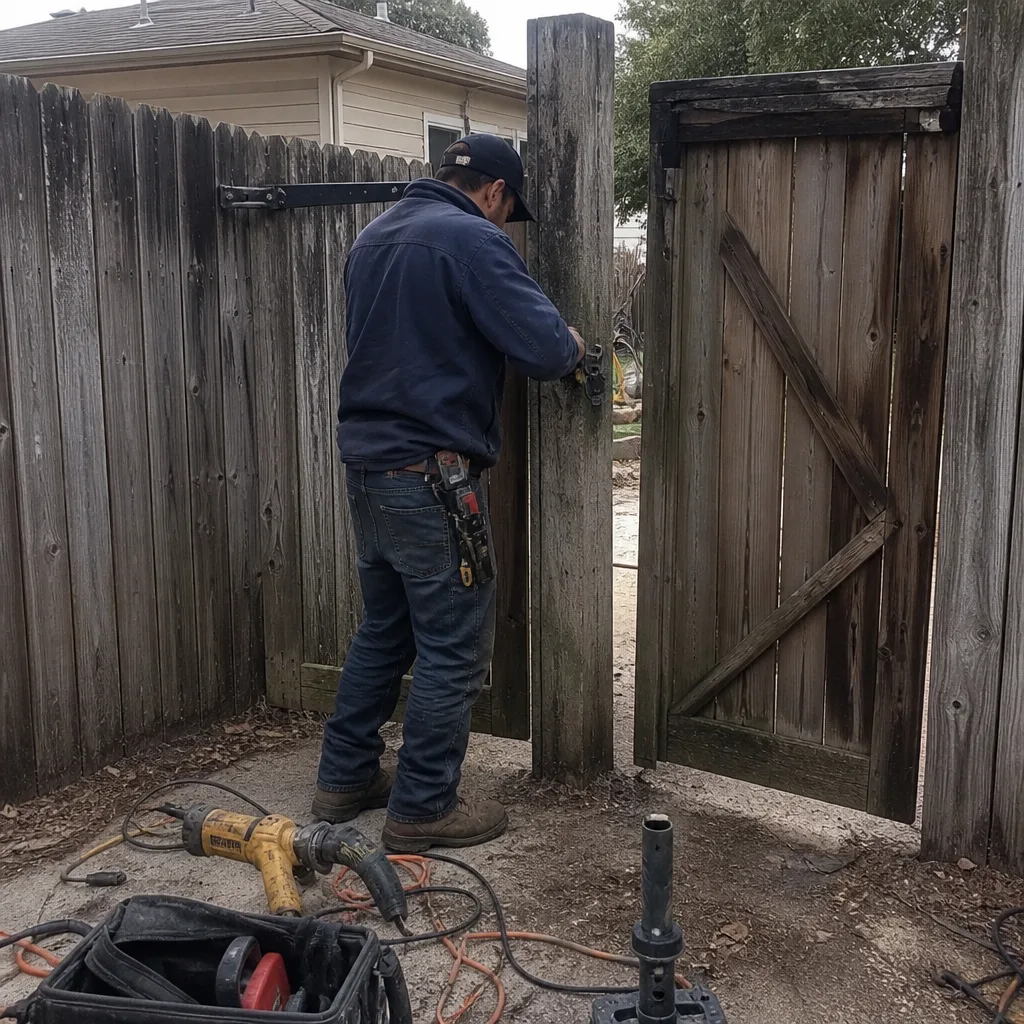 Before
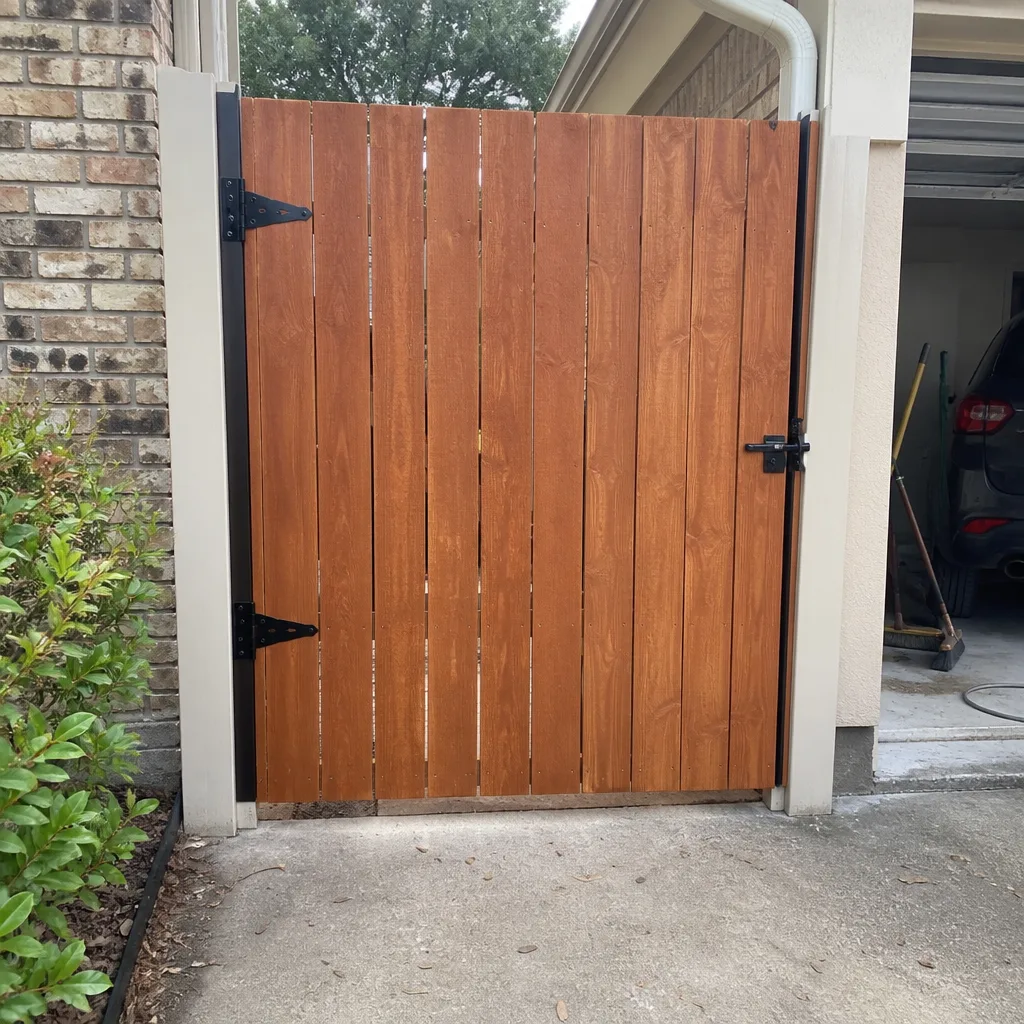 After
After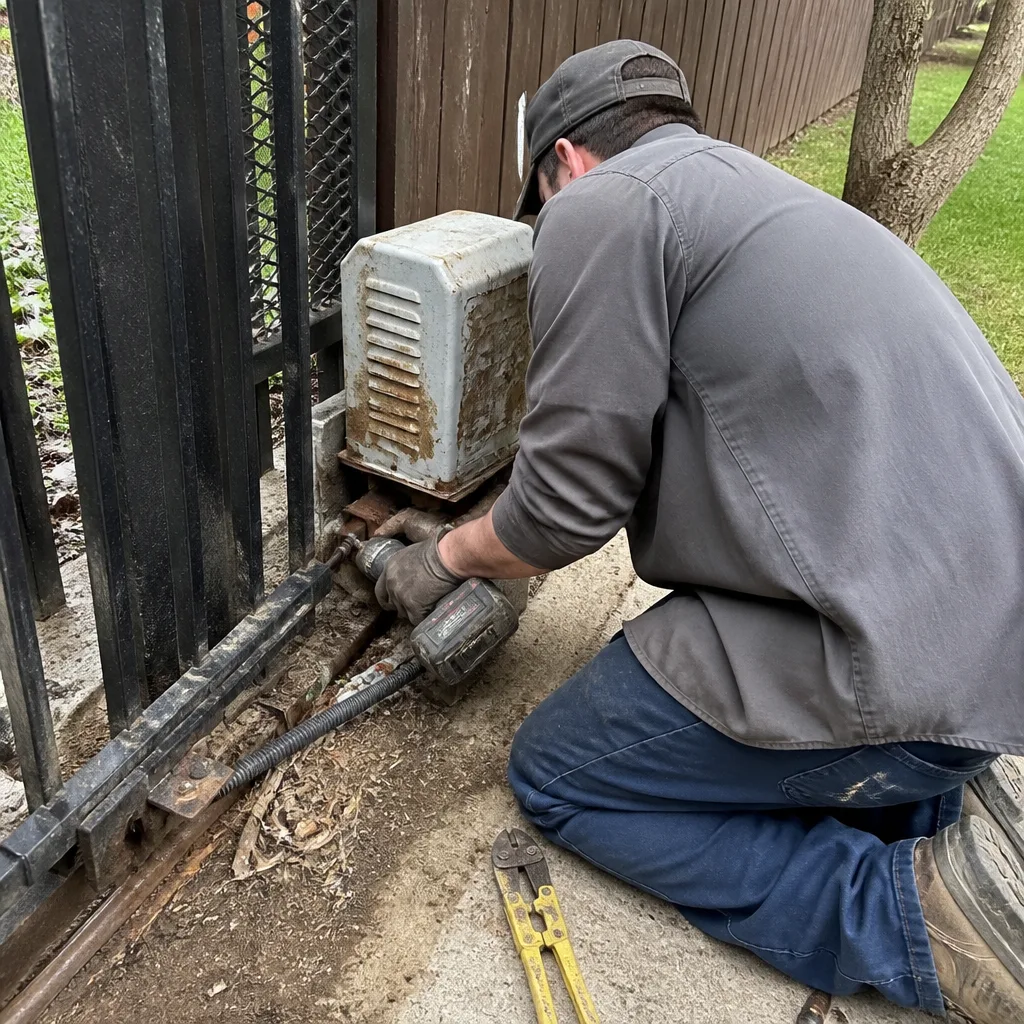 Before
 After
After Before
 After
After